
Steady Progress and Self-Reflection
Contents
Note: This letter reflects the author’s personal views and is shared for general informational and discussion purposes only. It is not investment advice or an offer to sell or solicit the purchase of any securities. Please see the full disclaimer below.
Last year’s letter labeled 2024 a year of change, of taking a hard look at where we were, what we’re doing, what was working, and what wasn’t. While not without its challenges and mistakes, 2025 has felt more stable, settled, and steady than any other time in my life or career.
While progress was made across the board, there weren’t major changes at either Permanent Equity or most portfolio companies. There were no major acquisitions, no big shocks to the system, no new fundraise, no new office, and no big changes in strategy. Between viruses and political upheaval, interest rates and tariffs, digital monkeys and AI, at times the last five years have felt chaotic and confusing. This year was a nice change of pace.
Our world glorifies explosive growth and change. Action – that’s what gets headlines and usually gets my attention. But it is steady, seemingly unremarkable, uninterrupted progress that delivers outsized returns over time.
Our investments in the Blueprint process and shift to company boards paid off. Collectively, they’ve installed a framework to promote healthy business habits. Portfolio CEOs pointed out that the process facilitated greater organization, consistently reminded everyone of expectations, and created accountability in new and better ways. While individual companies varied in performance, the portfolio performed in line with expectations overall. Plans rarely play out as expected, so when they do, it’s cause for celebration and gratitude.
On the personal front, despite multiple kids with broken bones and chasing my toddler son around, a similar pattern emerged. Life was full and mostly steady. No big changes. I’m grateful for a stronger marriage, deeper friendships, and a lighter and stronger body. A buddy of mine likes to say, “Everyone is either entering a crisis, in a crisis, or exiting a crisis.” I’m under no illusion that a crisis isn’t coming, but I’m grateful for the peace and will enjoy it while it lasts.
That’s not to say there wasn’t struggle, and, in fact, I wonder if God doesn’t give seasons of peace as space for us to look inwards and deal with broken areas of our lives that we’ve come to tolerate or ignore. That’s certainly an unexpected gift I received this year. More on that below.
Fear of Man
“Half a truth is often a great lie.”
— Benjamin Franklin
“The whole truth is generally the ally of virtue; a half-truth is always the ally of some vice.”
— G.K. Chesterton
“The truth will set you free.”
— John 8:32
For the last four years, I’ve started almost every day with reading the Bible and journaling. I ended 2025 with 358 journal entries. As my mentor told me it would, this practice has changed my life, but not in the ways I would have expected. I think I’m reading the Bible, but the truth is that the Bible is reading me.
Throughout the year, I felt increasingly pressed to take a hard look at a character flaw that has plagued my life – fear of man. This shows up as people pleasing, a reluctance to tell the truth, a shading of the truth, and difficulty saying no. These may seem independent, but they’re not. They’re deeply connected and deeply embedded. I had known about it, but mostly ignored or justified it. This year, the truth became clear. It’s ugly and destructive. It deadens my heart and hurts those around me.
It’s the quiet, constant calculus running in the background of my day: What do they think of me? What do they need? Did I say that right? Are they disappointed? Did I disappoint them? Can I recover? It’s like living inside a courtroom that is always in session…
The irony is that fear of man often wears the costume of virtue. It looks like kindness and being “easy to work with.” It looks like being agreeable and relational. Sometimes it is those things. But often it’s not love, but self-protection. It’s me trying to manage outcomes by managing perception.
And once I saw it, I started to notice the many variations: conflict avoidance, co-dependence, vague communication, overcommitting, resenting people for requests I said yes to, and a subtle habit of not saying the full truth when the full truth might cost me something. Not because I want to deceive, but because I want to be liked. Or admired. Or safe. Or left alone.
What makes this flaw so destructive is that it doesn’t just twist one conversation, but distorts reality itself. You can’t build a good life on distorted reality. You can build a story. You can build a performance. You can build something that looks impressive from the street. But you cannot build something meaningful, rich, and deep.
I’ve learned that lies, even polite, respectable ones, create complexity. Truth, on the other hand, is always low-maintenance. It just sits there while a lie is a careening machine you have to keep from crashing. It needs fuel. It needs updates. It needs version control. You have to remember what you said last time so you can repeat it with the same confidence next time. You have to keep track of what you didn’t say. You have to manage who knows what. And if you’re really committed, you start building an entire ecosystem around the lie so it feels normal. That’s when you’re no longer telling a lie, but living one.
If you’ve ever run a company, you’ve seen this dynamic with a different label: complexity. Or politics. Or “communication issues.” Or “misalignment.” Or the classic: “We’re just not executing.” But underneath a shocking percentage of business problems is something simpler and more uncomfortable: We either don’t know what’s true, or we do and won’t say it.
I’ve watched the pattern repeat in different industries with almost boring consistency. Business problems usually start small. An unhappy customer. A quality issue. A leader who’s not scaling. A weird kink in unit economics. In a healthy environment, the problem gets named early, while it’s still cheap. It gets dragged into the light, examined without drama, and addressed.
In an unhealthy environment, the problem gets managed instead of named. It gets talked around. It gets softened. It gets euphemized. It gets postponed until “after this busy season.” Sometimes it gets buried under a flurry of activity so no one has to sit still long enough to feel what’s true. The team stays “positive.” Everyone keeps smiling. And then, six months later, the same issue is now large, emotional, expensive, and wrapped in a layer of shame that makes it even harder to talk about. Reality didn’t change. The truth stayed hidden.
Dark things grow in darkness. That’s true in business. It’s true in marriages. It’s true in the soul.
That’s not a metaphor. I mean it in the most practical way possible. In the dark, a few mold spores become a hazard. If a small crack in the foundation is ignored, it becomes a structural issue. If an employee is quietly miserable and no one has the courage to ask why, it quickly turns to resignation, either literal or emotional. If a CEO is afraid to tell their board the truth, the pain gets worse and there’s less time to fix it.
The most expensive sentence in business and life is some variation of: “Let’s not talk about that right now,” because despite how it may feel, postponing truth only makes reality worse. By choosing safety we forgo the opportunity for health, relationship, and excellence. Discourse is how we sort truth from lies and build trust.
This is why fear of man is not a “quirk” or a personality trait. It’s not harmless. It’s not just being a little too soft. Fear of man trains you to avoid the light. It makes you treat the truth like a threat instead of a friend. It makes you prioritize short-term comfort over long-term health. It makes you choose the immediate safety of approval over the durable freedom of honesty.
And it makes you sick and tired.
One of the subtler costs of this sin, and I’m using that word intentionally because that’s what it is, is that it turns life into a performance. You’re always scanning faces. Reading the room. Calibrating. Editing. Adjusting. You can be highly functional and still be deeply trapped. You can be productive and still be imprisoned, because the prison isn’t made of bars, it’s made of lies. Every shaded truth is a small brick. Every “yes” that should have been “no” is a lock you install from the inside.
Which brings me to Christmas. I’m writing this on Christmas Eve while reflecting on the meaning behind the holiday. Strip away the sentimental playlists and the Christmas story is shockingly honest. It is not flattering toward humanity. It does not begin with mankind climbing up to God, getting our act together, and finally becoming worthy.
It begins with God coming down to us because we are not okay. It’s God telling the truth about the world: that it’s beautiful, and broken, and unable to save itself. Christmas is an honest diagnosis and an undeserved gift at the same time: We are more needy than we want to admit, and we are more loved than we ever hoped.
Christianity makes a claim that is either absurd or astonishing: Jesus doesn’t just teach the truth. He is the Truth. That one sentence has been pressing on me all year. If Jesus is Truth, then truth is not merely a principle, or about accuracy, or a call to better communication. Truth is a person asking for a relationship. Jesus is inviting us into the light where healing can begin.
And if I’m honest, a lot of my fear of man comes from living as if other people are god. As if their approval is what keeps me alive and their disapproval is what kills me. But Christmas is God gently (and firmly) correcting that delusion. God is not waiting for my performance. He’s entering my mess. He’s not asking me to curate myself into acceptability. He’s bringing light into the places I keep hidden. He’s offering a love that isn’t earned, which means it can’t be lost. That’s the only thing I’ve found that actually loosens the grip of fear: the slow, repeated experience of being fully known and loved.
Practically, this year has looked less like a dramatic breakthrough and more like a hundred small moments of choosing honesty over comfort. Telling the truth sooner. Naming something awkward instead of smoothing it over. Saying, “Let me think about it,” instead of reflexively saying yes. Admitting when I’m wrong without making excuses. Having a hard conversation while the problem is still small and the relationship is still warm.
It has also meant looking at my work through this lens. If fear of man creates complexity, then courage creates simplicity. If lies require maintenance, then truth removes it. If hidden problems grow, then naming reality as truth early is one of the highest-return activities any leader can engage in. The return comes from the relationship, which requires truth to be told lovingly for the good of the other.
Here’s what I’ve heard as I’ve continued to meditate on these things: Truth is light. Light is disinfectant. And disinfectant stings, especially on wounds I’ve been pretending aren’t there. But it’s also what heals. Tell the truth about what’s happening inside me. Stop performing. Stop curating. Stop negotiating with darkness. Bring it into the light. Confess. Ask for help. Make the hard call. Say the honest no. Tell the loving truth. Trade the prison of lies for the freedom of reality.
I’m not writing this as someone who has graduated from fear of man, and I’m not sure I ever will. I’m writing it as someone who has finally stopped calling it a personality trait and started calling it what it is: brokenness that makes my leadership weaker and my love less honest. I’m increasingly convinced that the way out is not knowledge or hard work; it’s truth and light.
Speaking of truth, let’s talk about the real job of a CEO…
What CEOs Are and Aren’t
"The first responsibility of a leader is to define reality. The last is to say thank you. In between, the leader is a servant."
— Max De Pree
Most people think of a CEO as the person at the top.
That’s true in the same way it’s true that the windshield is “at the front” of the car. Technically correct. Also, misses the point. The windshield isn’t the engine. It isn’t the wheels. It doesn’t move anything. But it does determine what the driver can see, what they ignore, and what they slam into at 70 miles an hour.
When done well, the CEO job is an arbiter of truth. The CEO stands at the border between the outside world and the inside world, between company mythology and competitive reality. That sounds obvious, but it’s not. I’d argue the norm is delusion, where organizations create realities disconnected from truth, complete with alternate headlines, villains, and heroes, all proclaimed with a shocking level of certainty.
So the CEO’s job starts with a basic question: What’s true? Not what’s comforting. Not what’s politically convenient. Not what our dashboards can measure. What’s true?
And what should we do about it?
But deciding what to do and then doing it, requires a blend of rare attributes. The CEO must be confident enough to pick a direction and humble enough to change it. Optimistic enough to inspire and paranoid enough to prepare. Warm enough to build trust and hard enough to make calls that disappoint people they like and care about.
We need to strip away the mystique. In practice, the CEO allocates three things:
Attention: If you want to understand a CEO, ignore their strategy deck and read their calendar.
Where attention goes, energy flows. Where energy flows, money follows. And where money follows, the organization slowly becomes something different, usually without anyone noticing until it’s obvious.
This is why the CEO’s attention is so expensive. It’s why it’s so easy to waste. There are a thousand “important” meetings that are actually just elaborate ways to avoid the one meeting that matters. There are a thousand “urgent” problems that are actually just the company asking the CEO to temporarily soothe anxiety.
A CEO’s attention is the company’s flashlight. Point it at the right things and companies transform. Point it at the wrong thing long enough and the wrong thing becomes the thing.
People: The CEO builds the team that builds the team.
I’ve learned that a healthy company isn’t built by a heroic CEO. It’s built by a great team operating with clarity, trust, speed, and accountability. The CEO’s role is to create that environment, protect it, and, when necessary, make the painful personnel decisions that preserve it.
This sounds straightforward until you live it. Then you realize you’re not moving boxes on an org chart. You’re messing with people’s dignity, livelihoods, and families. You’re also messing with the morale of everyone who stays. Every hire is a bet. Every promotion is a signal. Every tolerated behavior becomes a de facto policy.
The CEO becomes, whether they like it or not, the embodiment of culture. It’s not what they say they value, but what they practically reward, punish, ignore, and allow.
Money: This is the CEO’s most difficult job because it’s often the one they’re least trained for, that seems the most glamorous, and is extremely impactful over time.
Most CEOs come up through some form of excellence in sales, operations, engineering, or product. Then one day they wake up and realize the biggest decisions they make are capital allocation decisions: reinvest or distribute, grow or consolidate, buy or build, add headcount or automate, bet on the future or play it conservative.
Capital allocation is where strategy stops being a noun and becomes a verb. It is where vision gets an audit. And it’s also where a CEO can quietly ruin a business while looking busy. It’s remarkably easy to confuse action with progress, and reinvestment with wisdom. Oftentimes the best capital allocation decision is painfully boring: Do fewer things, do them better, and keep your powder dry. But, that’s not what gets applause.
In our world, with long-term owners, permanent capital, and no forced exit timetable, this is where the CEO job gets simpler. We don’t need theater. We don’t need growth for growth’s sake. We don’t need to hit a narrative for the next fundraising cycle or quarterly call. We can play offense when the opportunity is real and defense when it isn’t. We can say “not now” without pretending it’s “never.”
This brings me to what might be the most misunderstood part of the CEO role: The CEO is the Chief “No” Officer. Every yes is a no to something else. Every strategy is a pile of exclusions. Every commitment is a tradeoff. The organization will always ask for more: more initiatives, more products, more meetings, more hires, more exceptions, more complexity. Increasing complexity is the default setting of life, and companies are not exempt from natural order.
A CEO has to become comfortable being the person who disappoints people in the short term so the company doesn’t disappoint everyone in the long term. This is where I’ve personally struggled, both as a leader and as an owner. I want to be helpful, agreeable, and liked. I can easily slip into short-term people pleasing at the expense of leading well.
Sometimes I’ve confused my progress anxiety for insight. I’ve wandered into decisions too early because “someone should do something.” I’ve also learned slowly and painfully that a CEO can add enormous value simply by refusing to add noise. Clarity is kindness, but often feels like inaction to busy people.
A lot of CEO work is invisible. It’s pressure management. It’s absorbing emotion without spreading it. It’s knowing what you think and how to say it with grace. It’s carrying the weight of uncertain outcomes while still asking the team to move forward decisively.
This is why, in our portfolio, we care less about a CEO’s charisma and more about their character and judgment. We’ve found that the best CEOs have a rare combination of humility and intensity. They don’t need to be the smartest person in the room, but they do need to be the clearest. They don’t need to have all the answers, but they do need to be willing to make the hard call.
So what do we want from our CEOs?
We want them to be fully themselves, not the corporate watered-down office version. We want them to lead wholeheartedly. We want them to keep one eye on the outside world and one eye on the health of the inside world, and to resist the temptation to trade one for the other. We want them to build a team that tells them the truth, not what they want to hear. We want them to allocate attention, effort, and money with discipline, especially when nobody is watching. And, perhaps most importantly, we want them to make themselves increasingly unnecessary.
That last line sounds offensive until you realize it’s the ultimate compliment. The pinnacle of leadership is to be always useful and never necessary. A great CEO builds an organization that can thrive without their constant presence. They build systems that don’t require heroics. They develop leaders who can lead. They create clarity that outlives their moods. And they ultimately engineer an operation that will outlast their direct involvement.
Continuous improvement will be a core component of a healthy culture. The work should, in fact, be hard. If a CEO believes all the pieces are in place and their work is finished, that same attitude will ripple through the organization. Inconveniently, the market will continue to change. It’s not about looking busy, saving the day, or being personally critical. Rather, the CEO must consistently redefine the organization’s definition of greatness, along with expectations of everyone involved. And if those expectations are not reflected in their own behavior, conflict should be expected. The best CEOs are relentless in their desire to make themselves better first, then to make everyone and everything around them better.
Ultimately, the CEO's job is to seek the truth and tell the truth. Seek and tell the truth about reality. Seek and tell the truth about people. Seek and tell the truth about yourself. Then decide, without perfect information, what the company will and won’t do.
AI: Helper, Not Replacer
“AI is overhyped in the short term, but still underappreciated in the medium to long-term."
— Demis Hassabis, Google DeepMind CEO, (Dec. 16, 2025)
At 42, I’ve watched enough hype cycles to see one coming. The story is always the same – this time is different. This time the payoff will shortly be worth the promise. There’s almost always a there there, but the problem is that the payoff inevitably comes far later than the promise. Whether it’s the internet, self-driving cars, 3-D printing, personalized medicine, VR, crypto, or now AI, the lag is about 10 years between what is soon promised by the advocates (and grifters) and when those promises materialize in a way that affects how the world works.
Frankly, I whiffed on the AI hype cycle. When I wrote last year’s letter I thought this time was different. ChatGPT’s o3 model with deep research felt revelatory. Prior to that, I thought chat-based AI was fun, but clunky and not widely helpful. o3 was different, especially with deep research turned on. It felt like a startling change of trajectory. Quickly, I started using it to help me do almost every part of my job – research, analysis, planning, thought partnership, and communication – in anticipation of what came next.
It felt like pre-o3 AI was a high school intern trying hard to help, whereas o3 was a 22-year-old Harvard graduate, unpolished, but smart, quick, and actually helpful if you directed them enough. I imagined the next iterations of o3 to continue, or perhaps even accelerate, the rate of improvement. Extending the analogy, I anticipated that in 2025 the 22-year-old would become a mid-30s professional. I said in last year’s letter, “My guess is that 2025 will mark the beginning of widely applicable and highly valuable AI becoming available for those who are paying attention.”
If that’s where you think things are headed, then the logical conclusion is to do what I said we would: "Our plans are to invest significantly in the search for, experimentation with, and implementation of AI. We plan to hire someone to lead this effort, hopefully within the first six months of the year, and offer that high-impact, rare expertise as another shared service to our portfolio.”
We did exactly that, shortly thereafter hiring an experienced technologist with a Ph.D. in AI to lead projects and prompt-writing, and making a firm-wide push to integrate AI across major areas of work. We connected with other firms and their technologists across both VC and PE, comparing notes and approaches. We ran dozens of experiments at the firm level and in the portfolio, creating agentic AI to perform interconnected tasks and make more data actionable, while also training executives on prompting to decentralize testing.
While not a zero, the results have been shockingly poor compared to expectations, and I can confidently say not for a lack of effort. Nothing we created has been game-changing or revelatory. Almost everyone at the firm is using AI in some way, and it can be useful, but the current trajectory is a far cry from where I thought it would be. Probably most notable is the leads generated by AI for portfolio companies.
We’re seeing similar results from other organizations. Publicly, it’s easy to play buzz word bingo and sprinkle talk of AI to give the appearance of progress. But behind closed doors and off-the-record, the story changes. I recently chatted with the founder of a large private equity firm that has publicly touted their AI program in hopes that they figured something out. They haven’t. When I asked him about the value of their AI efforts, he said, “Absolutely nothing. It’s window dressing.”
Today, the technology just isn’t there to complete a series of tasks that needs analysis combined with even modest judgment. The work processes often break or become stuck. It reminds me of the early days of gaming when you had to jiggle the controller just right and blow air into the cartridge before it would work. You can baling wire and duct tape it with highly paid and constant attention, but at that point, why not just hire a person to do the work?
Another major problem is that AI frequently hallucinates and lies, or should I say guesses incorrectly, and does so in unexpected ways. If the current state of AI is a recent Ivy League graduate, they’re also a convincing sociopath. You know they’re likely lying, but you just don’t know how. To figure it out, you have to do all the work you were hoping to sidestep.
For instance, in preparing to do an interview, I asked GPT’s 5.1 model with pro mode to create a series of questions based on the author’s book. When I read through the questions, I was impressed with the specificity and quality. I had read the book about six months prior and they seemed directionally correct, at least in the ballpark of what I remembered. I curated them and sent them along to the author to review as a direction for the interview. The author emailed me back shortly thereafter and was confused because most of the questions were about projects they weren’t involved in, or had happened before they arrived or after they departed. I confessed and apologized. My sociopath helper strikes again!
This is where the story gets muddled. It takes me about 2 months to write this letter. During that time, the last couple paragraphs have changed seemingly every week.
Here’s what I had written up to the week of December 15th: “For my use case, the trajectory of ChatGPT has leveled off, if not degraded over the past year. Despite paying for the top-level subscription, I would put o3 with deep research above the current 5.1 models both in terms of creativity and accuracy. And, as of writing this, Google recently released Gemini 3, which has become my default AI. It’s so clearly superior to ChatGPT that OpenAI’s CEO Sam Altman has recently declared a ‘Code Red,’ shutting down projects that draw resources away from improving ChatGPT. As a long-time paying customer, I’m grateful that the competitive pressures of capitalism got their attention. My hope is that the technology continues to improve.”
What changed that week was that ChatGPT 5.2 was released, and as I had hoped, it was an improvement. I immediately felt my personal use of AI swing from 95% Gemini back to mostly ChatGPT. As of the last iteration of this letter around the New Year, I’m using ChatGPT about 60% of the time and Gemini about 40% of the time. I find ChatGPT much better at personalization, but Gemini better at research and anything to do with images. This will likely continue to change month-by-month going forward as new models are released.
All that said, for the time being, we’re pulling back on the pace and vision of our agentic AI ambitions for Permanent Equity and doubling down on meaningful relationships and real-world judgment. Perhaps we’re zigging at exactly the wrong time. Time will tell.
Fees and Performance
“Cash is a fact, profit is an opinion.”
— Alfred Rappaport
Compensation should be simple, easy to understand, straightforward to calculate, and aligning in rewarding upside, punishing downside, and sharing value creation. When a compensation plan requires three footnotes, two “adjustments,” and a glossary, you’re no longer describing performance. You’re storytelling.
Boards see this with CEOs: Tie incentives to a malleable metric and you’ll get a CEO who becomes a part-time operator and a full-time narrator. Private equity has its own version of that problem when fee layers pile up and the GP can get rich regardless of whether LPs actually make money.
Permanent Equity tried to design around that temptation. No management fee. No transaction fees. No monitoring fees. We earn performance fees when cash distributions are made to our investors, because cash is hard to argue with, which we believe is a straightforward and transparent way to align incentives. Cash carries the weight and substance of true reality. Cash doesn’t care about your projections, deck, or marks.
Traditional private equity compensation boils down to a smorgasbord of fees, with most fees divorced from performance. Common ingredients include a fixed management fee, often charged on committed capital early, sometimes later on invested capital. Transaction fees for buying, selling, or refinancing portfolio companies. Break-up or dead-deal fees for deals that are pursued but don’t close. Monitoring, advisory, and management fees charged to portfolio companies, sometimes offset against the management fee, sometimes not, and sometimes in ways that require a forensic accounting degree to comprehend. There are fund expenses and reimbursements piled on, and finally performance fees, or carried interest. Incredibly, the new reporting template from the Institutional Limited Partners Association defines almost 100 different fees and expenses GPs can try to charge. Permanent Equity would answer N/A to all but one.
The variety and number of fees makes it difficult to compare one firm to another. Ultimately what matters is total return and the percentage of that total return paid to the LPs and GP. Said differently, you can slice a pie thinly and name each piece something different, but what counts is who gets how much of the pie.
The SEC recently published a Form PF-based study that reports gross returns, net returns, and the “margin between gross returns and net returns” – and they explicitly describe that margin as the piece that “accounts for fund-level fees and allocations.” In that table (fiscal years 2013–2023), the annual “margin” sits around 4.5%–5.7%. If you take those exact numbers and ask, “What share of returns does the margin represent?” you get two very different (and equally true) answers:
As a share of gross returns, the margin works out to ~19% to ~39%, averaging ~30% across those years
As a share of net returns (what LPs actually keep), the same wedge becomes ~24% to ~65%, averaging ~44%
That’s how you can honestly hear “total fees are ~30%” in one conversation and “fees are closer to half” in another, and nobody is necessarily lying. The denominator matters.
Cambridge Associates makes the same point from a different angle. They write: “Fund-level fees cost private equity investors 616 basis points (on average), or about 0.2x MOIC over the life of a fund.” They also note carried interest can increase fee drag in stronger funds/vintages. That “0.2x” is sneaky. If a fund’s gross multiple is 1.5x, then a 0.2x fee drag is 40% of the gross profit. If it’s 1.4x, it’s 50%. CalPERS disclosed, in the context of scrutiny about tracking fees, that it paid about 7% in annual all-in-costs for its private equity investments. With a long-term private equity net return of 11%, this means an average all-in fee burden for private equity of 38.8%.
Not a scandal. Just math.
The bottom line is that in traditional private equity structures, the GP is both taking a significant portion of the total return and doing so independent of performance. Metrick and Yasuda of Stanford note, “About two-thirds of expected revenue comes from fixed-revenue components that are not sensitive to performance.” Not always. Not in every fund. But the broader system encourages it.
If you pay a GP primarily for running a fund, don’t be surprised when the job becomes about running funds, not about investing, let alone returns.
Outside Board Members
“When seeking directors, CEOs don’t look for pit bulls. It’s the cocker spaniel that gets taken home.”
— Warren Buffett
As we rolled out boards of directors at each company, we intentionally chose not to immediately add any outside board members. This is what I wrote in last year’s letter:
“Here’s what we’re attempting: a small and talented group of highly aligned and motivated people working towards a common goal. Decision-making is tight and accountable. There’s nowhere to hide and no one to blame. Success and failure are felt and shared. It’s just large enough, between 3-6 people, where there’s diversity of thought and healthy horizontal accountability, but communication complexity, politics, and principal-agent problems are kept at bay.”
The boards are now seasoned, and we plan to start adding outside board members to a handful of our company boards. Why wait a year? Because adding an outside director too early is like inviting a marriage counselor on your third date. They might be wonderful. They might be right. But the timing is unlikely to be fruitful.
We needed our boards to become teams first. We had to build shared language, shared expectations, and shared trust. Our “Blueprint” cadence helped. When the objective is written down, the strategies are explicit, and the metrics are agreed upon, you don’t have to rely on vibes. You can have the kind of conversation professionals have: “We said this mattered. Does it still? Are we doing it? If not, why?” It’s not rocket science. It’s just rare.
Our expectation is that outside board members will add three invaluable components – experience, talents, and relationships.
Experience is the least sexy and most important. “I’ve seen this movie before” is one of the few true competitive advantages in business. Most of what goes wrong in a company is not novel; it’s just novel to you. Organizations mostly hit the same potholes of poor pricing, timid sales management, sloppy incentive design, unplanned founder succession, or botched ERP implementations. A good outside director has scars in the exact places you’re about to get cut. They don’t eliminate pain, but they shorten it and hopefully help avoid the hospital. In the midst of what feels like a crisis, they can calmly say, “This is normal,” while everyone else is panic-Googling.
Talents are different. If experience is pattern recognition, talent is leverage. Sometimes the board doesn’t need another voice; it needs a particular muscle. Maybe we need someone who is world-class at online marketing, or who has built operations at scale, or who knows how to implement complex technology. The right director is not a “wise elder” who gives thoughtful nods and quotes Peter Drucker. The right director is a doer who can take a messy problem, make it legible, and help a team move from “we should” to “we did.” Strategy is often obvious. It’s the muscle to move the problem that is lacking.
Then there are relationships, which sounds like networking and can feel vaguely icky, like you’re about to ask a stranger at a hotel bar if they’ve “heard about a great opportunity.” That’s not what I mean. Relationships are the invisible infrastructure of every business, the hard-won trust that gets the right hire to take your call, the vendor who ships early when everyone else is late, or the potential customer who gives you a meaningful review. Great directors don’t just bring contacts. They bring credibility in the context of meaningful relationships. When they introduce someone, it lands.
Our plan is to add outside board members cautiously. That’s for a couple of reasons.
First, outside directors are not magic. Like all people, they come with strengths and shadows. They’re messy like the rest of us. A brilliant operator can be allergic to nuance. A legendary networker can be overconfident. A seasoned executive can accidentally import BigCo solutions into SmallCo realities. Some directors unconsciously try to “win” board meetings, which is impressive in the way it’s impressive when a grown man dunks on a ten-year-old. Sick bro.
Second, the wrong outside director is worse than none. They add noise, not signal. They create performative dynamics. They turn tight accountability loops into polite theater where everyone brings their lines and no one brings the truth.
And, critically, the director cannot want a full-time job on the management team. If so, conflict will persist. They have to want the team to win.
Here’s our filter:
We’re looking for people who love the game, not the stage. People who can hold conviction without crushing a room. People who can ask naïve questions without embarrassment, and hard questions without ego. People who can be helpful in the moment, not just insightful in theory. People who understand that the job is not to make the CEO feel smart or small, but to make the company better.
We’re looking for people who are aligned. We are long-term. We are patient. We are allergic to financial engineering and corporate cosplay. We want boards that spend more time on the future than on optics, more time on root causes than on narratives. If someone’s primary gift is impressing other board members, they will do great…somewhere else.
We’ll start by adding one or two directors to a handful of boards where the need is clear and the timing is right. We’ll treat it like any other important hire: slow, specific, high-conviction. And then we’ll watch. Because if I’ve learned anything from changing my mind on boards, it’s this: the world is full of ideas that make sense and don’t work. The only way to know is to try carefully, honestly, and with enough humility to admit when your “best practice” was actually just your best guess.
Here’s our list of portfolio companies. If you know someone well, have worked with them extensively, think highly of them, know they share our values, and believe they’d be a great fit for a board role, please send them our way.
We’ve launched a page on our website that has more information and how they can best connect.
Note: For those seeking full-time career opportunities, sign up for “The Orbit.”
Selling for the Right Reasons
At Permanent Equity, we’ve spent 15 years telling owners, “We buy with no intention of selling.”
We mean it. We raise 30-year funds. We don’t have investors breathing down our necks for exits. We’re not trying to flip someone’s life’s work to the next buyer for a quick pop of IRR. Our model was built as a reaction to that treadmill.
But just because we don’t have to sell doesn’t mean we won’t.
Our default is not to sell. We like boring, durable, cash-flowing companies. We like relationships that deepen over decades, not transactions that roll off after a few short years. We like the slow, unsexy work of compounding: hiring better, training better, serving customers better, inch by inch. Big wins in investing usually come from not interrupting a good thing.
So any conversation about selling starts with a presumption against it. But the thing is that long-term capital provides the ability, not the imperative. If we can no longer honestly say we’re the best owner for a business, then continuing to hold it isn’t faithfulness or loyalty. Rather, it’s selfishness and vanity dressed up as commitment. Because sometimes it’s true that someone can steward a company better than we can.
It could be a strategic buyer with unique synergies. Maybe a larger industry player that can plug the business into a global distribution network, a proprietary technology platform, or a massive salesforce.
In each case, the question isn’t, “Can we keep owning this?” We probably can. The question is, “Are we the right steward for what this business needs next?” If the honest answer is no, and there’s a clearly better home available, then the best capital allocation decision and kindest thing we could do is sell.
2025 Roundup
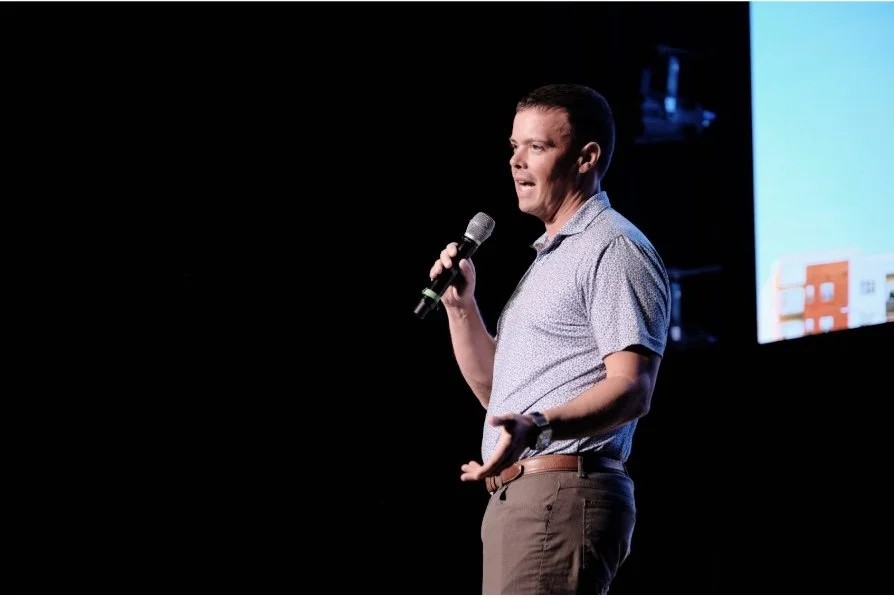
Main Street Summit + Capital Camp: It was a true pleasure to welcome 1,400 owners, operators, and investors to Columbia, MO in early November. For the first time, the events were held simultaneously. I was nervous to see how it would work, and pleasantly surprised when the combination of the events resulted in broader relational overlap and greater access to more people. While there’s always room for improvement, the feedback has been the most positive we’ve ever received. So, we’re running it back September 15-17, 2026. Tickets aren’t yet publicly available, but if you’ve read this far, we’ve opened a two-week early-registration window. Hope to see you there.
10th St. Talent: It’s hard to describe how proud I am of this team-turned-PortCo. What started as a need and idea for in-sourcing our executive recruitment six years ago has turned into a team of seven, soon to be ten, full-time employees. People are everything, and Kelie and her team have nearly perfected the blend of recruiting art and science. They’ve been a not-so-secret weapon for Permanent Equity. While they’re all booked out for Q1, Kelie tells me there are a few open slots for Q2 if you’d like to test them out.
Unqualified Opinions: If you’ve ever wanted to follow what we’re thinking about, struggling with, or debating, Tim’s (President and CIO, formerly least qualified CFO in America) daily emails would be a delightful addition. My favorites always end up being about the tribulations of our intrepid biz dev associate Holly who infamously headlined such classics as “The Big Present in the Bathroom” and “Drunk Noods.” They’re mostly gold, except for “Not Your Best.” Can’t win ‘em all.
Health As Capital: If you’re going to build for decades, you have to be around to do it. Over the past 18 months, we’ve put a greater internal emphasis on our physical health. We brought on Alex as our Director of Health and Fitness and converted our studio apartment into a gym. We’ve also been learning, and are starting to share those learnings in a new section on our website called Health As Capital. If you’re also aiming to become more fit, perhaps it might help you too.
Wrapping Up
I want to close this year’s letter with some perspective that came to me this year.
Earlier in the year, I was praying about a series of particularly difficult challenges and some tough upcoming conversations. My heart was anxious and troubled. As God often does, something came up in me.
I felt God kindly reminding me that every day I have 10,000 blessings, so many blessings that I could literally spend all day and night thanking him for them. And, I will always have 10 problems, many of which are worries over the blessings I’ve been given. When those problems are solved, more will pop up. The question I have to ask myself daily, or perhaps even hourly, is which do I focus on? 10 problems, or 10,000 blessings? We’re told that in this life we will have trouble. But we’re also told to fear not, for God is with us and for us.
I don’t know what next year holds for any of us. I do know what I’m hoping for you: that you’d receive good gifts in the form they actually arrive – often small, often ordinary, and often disguised as a hard conversation, a needed boundary, or an unexpected kindness. May you be given the kind of success that doesn’t hollow you out, and may you be protected from the success that does. May you have the rare desire to want less of what doesn’t last, and more of what does.
— Brent
P.S. That concludes the investment letter. Like last year, what follows is a personal postscript. I chose to include these two sections because they’re two topics that have impacted my life greatly over the past five years. My hope is that perhaps it might spark something helpful in you.
Health Update: Settling in for the Long Haul

2010 vs. 2025
“The only lasting fuel is routine. And you only get a routine by dragging yourself on the days when you have no motivation. Over and over.”
— Arnold Schwarzenegger
If 2023 was the year I finally stopped treating my body like a rental car, and 2024 was the year I cemented my habits, then 2025 was the year I settled in for the long haul.
The good news: My latest markers are moving the right direction. Blood work recently returned an A1c of 4.8 and ApoB of 89. DEXA puts me at 18.9% body fat. I recently ran a 23-minute 5K and saw 175 lbs on the scale. Those are much, much better than where I started 3 years ago. While not perfect, they do feel like evidence that the boring fundamentals are working – do something active every day, cook your own food, watch protein and calories, and lift heavy 2-4 days/week.
The better news is less measurable: I feel good, rarely get sick, and have abundant energy. I can keep up, no matter what is going on. Games, workouts, long days, travel, playing with the kids. I don’t feel like I’m negotiating with my body all the time. On the tennis court, my movement is dramatically better. I’m quicker and more stable. Life is certainly more enjoyable being lighter and stronger.
Injuries have plagued me the last couple years. Turns out when you’re working out every day and in a calorie deficit, your body doesn’t repair nearly as well. I spent way too long trying to out-stubborn a couple of bicep tendon strains in my shoulders and a lingering hip issue. My strategy was embarrassingly sophisticated: Ignore them and hope they went away. Spoiler: In your 40s, things don’t “just go away.”
What finally worked was dealing with the problems directly, strengthening what was weak, mobilizing what was tight, and being patient enough with certain movements to let tissue heal. There’s a goldilocks to recovery. Too little challenge and the muscles and tendons aren’t signaled to rebuild. Too much work and things never have a chance to heal. The sweet spot is to back off movements, use what feels like a silly weight, and slowly rebuild the movement over time. It was humbling. It also reminded me that discipline without wisdom is just a more organized way to get hurt.
The closer you get to “fit,” the more progress slows. Early on, almost any reasonable change paid dividends. Later on, your body becomes more efficient at protecting homeostasis. The same effort produces smaller visible changes, which is psychologically brutal if your motivation is applause, aesthetics, or the dopamine hit of a new low on the scale. The goal isn’t to win the mirror. It’s to build a body that can carry a life – work, family, friends, service, play – without constantly breaking down. The scoreboard is helpful, but it’s not the game.
The Strange Math of Generosity
"We make a living by what we get, but we make a life by what we give.”
— Winston Churchill
One of the benefits of a career in business and investing is that, over the years, you get good at money. Good at earning it, good at deploying it, good at protecting it, good at justifying why you should keep it. It’s an occupational hazard. You start to see the world in tradeoffs and incentives, in ROIC and MOIC. If you’re not careful you eventually apply the same framework to your soul: What do I gain? What do I risk? What’s the optimal move?
My wife and I didn’t become more interested in generosity because we had more, but because we could feel a shift that seems to be universal. The more you have, the more easily you lose the plot. We could feel something hardening in us, a subtle drift toward scarcity, caution, comfort, and self-protection dressed up as wisdom.
Generosity, for us, has been a journey. We started scared and reluctant. Giving was intermittent and stressful. I can remember the first time we gave a $10,000 check. I wanted to throw up. My mind raced with fear. “Are we going to be ok? What happens if we need that money? Do you know what you could buy with that? Are they going to use it well?”
Over time, we started taking generosity more seriously as a primary practice. Not performative. Not guilt-driven. Not a “look at us” hobby, or a way to keep up with the Joneses. In fact, we give everything anonymously and don’t attend galas. It became a decision we kept making in small, imperfect ways to loosen our grip, to say yes more often, to be quicker to help, to build our life around open hands instead of clenched fists.
And here’s the part that surprised me: It didn’t just bless the receiver. It has changed us and continues to.
I don’t mean it turned us into saints. It mostly revealed how far we have to go. Generosity has a way of exposing the little idols you didn’t know you had: comfort, control, reputation, the quiet belief that I’m fine as long as my accounts are growing. Giving, real giving, pulls those things into the light. It “pinches,” as C.S. Lewis put it. He said in Mere Christianity that the only safe rule is to give more than we can spare, and that if our giving doesn’t hamper us, it’s too small.
But even with that discomfort, we’ve watched generosity bear fruit. Not always immediately. Not always in ways you can chart. But it has been a strangely reliable source of joy, clarity, and freedom. It has made financial success feel less like something to defend and more like something to receive and re-deploy. We are blessed to be a blessing.
The biblical case for generosity starts with the uncomfortable premise that none of us is the hero of the story. We’re stewards, not owners. Recipients before we’re benefactors. The Christian claim is that God is lavishly generous, and that generosity is one of the ways we participate with him and learn to look like him. Jesus said, “It is more blessed to give than to receive.” This isn’t just a command; it’s a description of reality. Do we believe it?
Ultimately, I want to say to the successful builder, investor, operator, and accumulator: It’s unlikely you need another win, or another car, or another vacation. Those are all good things and can be gifts to be received. What you need and what I need is a deeper kind of wealth.
Most of us are good at getting and holding. We’re less practiced at releasing. We know how to work hard, delay gratification, compound, and optimize. Generosity is like strength training for the soul that says, “I’m not ruled by scarcity. My hope and identity are not in my wealth.” It is a way of keeping money in its proper place: a tool, not a god, not a source of meaning, nor your identity. It is a way of receiving worldly success as a blessing, so that it doesn’t rot you from the inside.
So if you’re curious, but wary, start small but be intentional. Give in ways that create connection and impact. My wife and I are still learning. We still feel the inner toddler tantrum sometimes: “But I want to keep it.” We still get it wrong. But I can say, with a straight face and a clear conscience: Taking generosity seriously has made our lives better. Not perfect, but better. Lighter. Freer. More joyful. More human.
And if you want the most “business” takeaway I can offer, it’s this: Despite our giving growing over the years to around 25% of our pre-tax income, generosity has been one of the highest-return investments we’ve ever made, except the return isn’t mainly dollars. It’s the kind of wealth you can actually bring with you: joy, meaning, relationships, and a heart that’s still soft after success.
Practically, this looks like seeing need and meeting need, if you feel called. It’s holding whatever you have with open hands and asking what it might look like to help someone else with it, with zero expectation of recognition or reciprocity.
If it has been a while since you’ve been generous, give it a try. If you pay attention, there’s need everywhere. See what happens. I suspect it might be far more impactful for you than the recipient.
This letter has been prepared by the author in an individual capacity and, where applicable, in the author’s role as the founder and CEO of Permanent Equity Management, LLC (“Permanent Equity”). The views, opinions, and statements expressed herein reflect the perspectives of the author as of the date indicated and may include personal observations, experiences, and beliefs. Such views may not necessarily reflect the views of Permanent Equity, its affiliates, or any investor in a Permanent Equity-advised fund, and are subject to change without notice.
This letter is provided solely for general informational, educational, and discussion purposes. It does not constitute, and should not be construed as, legal, tax, accounting, investment, or other professional advice, nor does it constitute a recommendation, endorsement, or solicitation to invest in any security, investment product, or strategy. The information presented is general in nature, is not tailored to the circumstances of any particular person or entity, and does not purport to be complete or comprehensive. Readers should consult their own legal, tax, financial, and other professional advisers before making any decision based on this material.
Nothing contained in this letter constitutes an offer to sell or a solicitation of an offer to purchase any interest in any private investment fund or other investment vehicle sponsored or advised by Permanent Equity or any of its affiliates. Any such offer or solicitation may be made only pursuant to a confidential offering memorandum and related subscription documents, and only to qualified investors in accordance with applicable securities laws. Permanent Equity provides investment advisory services exclusively to privately offered funds and does not offer such services to the general public.
Certain statements in this letter may constitute forward-looking statements, including statements regarding beliefs, expectations, intentions, goals, strategies, plans, or future performance. Such statements are inherently uncertain and involve known and unknown risks, assumptions, and other factors that may cause actual results to differ materially from those expressed or implied. There can be no assurance that any expectations, projections, or assumptions will be realized.
Any references to portfolio companies, investment processes, governance practices, boards, performance characteristics, or operational outcomes are illustrative only, are subject to change, and may not be representative of all investments or situations. References to “boards” or similar governance structures refer to advisory or contractual arrangements applicable to specific portfolio companies and do not imply uniform authority, control, or fiduciary responsibilities across all investments.
Past performance, whether of Permanent Equity, its funds, portfolio companies, or related strategies, is not indicative of future results. No assurance can be given that any investment objective will be achieved or that any investment will be profitable. Readers should not assume that any investment discussed herein was or will be successful.