

Sometimes when people look at our portfolio they’ll ask a follow-up question like, “Why do you like retail?” or “What’s your fencing industry thesis?”
But the fact is that we don’t necessarily like retail apparel or have a fencing industry thesis. Rather, we like Rylee + Cru and Ace Fence. That’s both a distinction and a difference, so sometimes it’s helpful to talk through how those investments came to be.
During any given year we’ll see thousands of investment opportunities. Given all of those reps, our team has gotten pretty good about predicting – before we even open a deck – what the numbers inside are going to look like. If it’s a commercial subcontractor, for example, you’re likely to see 25% gross margins, low teens EBITDA margins (they always find a way to eke into the teens), and a 70-plus-day cash conversion cycle.
So what’s interesting is not seeing the twentieth one of those, but the one that doesn’t look like the others.
That was Ace Fence: it offered a different profile from the norm. There turned out to be myriad reasons why that was the case, and some of them simply can’t be replicated at another fence builder. So even though we like Ace Fence, we don’t like all fence builders.
Same thing at Rylee. We’ve seen a lot of consumer brands over the years and the playbook is broadly the same: load up on inventory, max out D2C ad spend, push the top line, and reload…never mind the risk. Like Ace, Rylee was different. It grew inventory graciously, balanced wholesale and D2C sales, and walked away from a major distribution partnership.
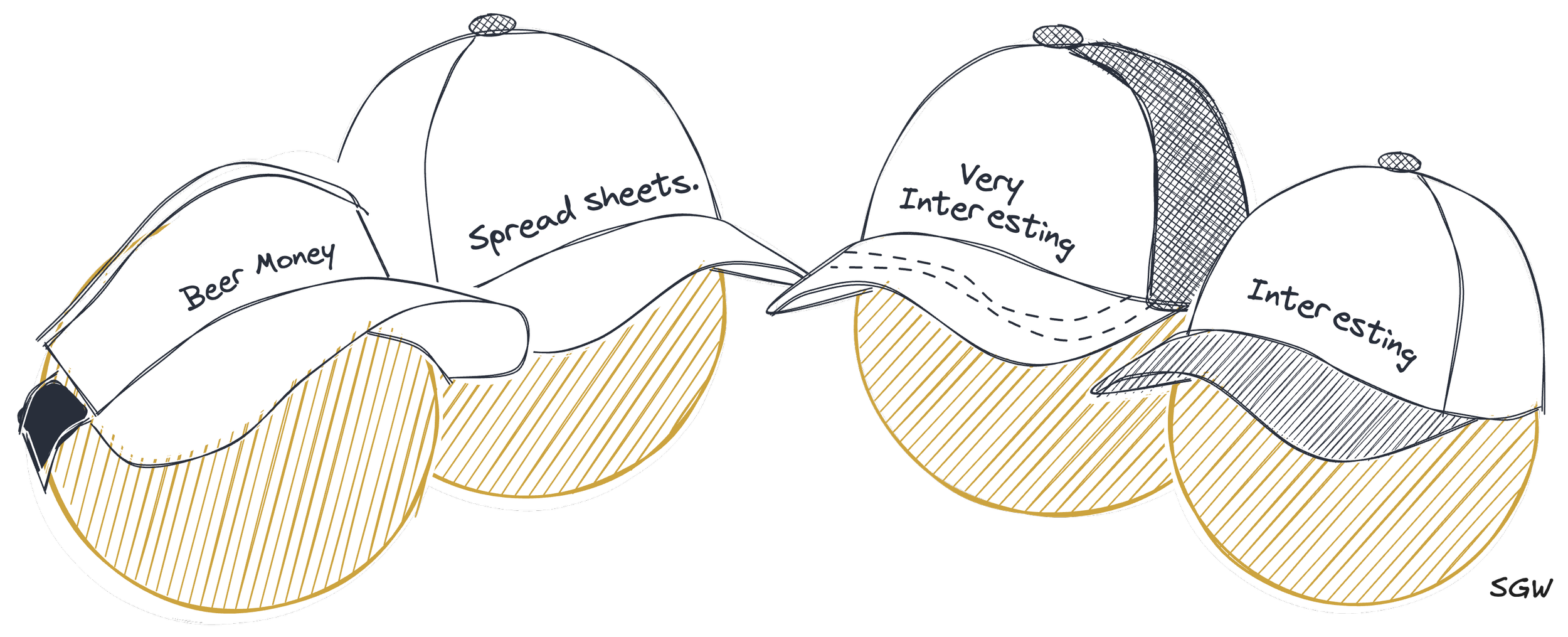
That’s interesting.
So when we’re looking at potential investments, one of the things we’re hunting is the unexpected. If we see that and can understand why – and why it’s sustainable – that’s not only interesting, it’s potentially very interesting.
– Tim
Sign up below to get Unqualified Opinions in your inbox.
The information, opinions, and views presented in this publication are provided solely for general informational and educational purposes. They are of a general nature, have not been tailored to the specific circumstances of any individual or entity, and do not constitute a comprehensive statement of the matters discussed. This material should not be interpreted or relied upon as investment, legal, tax, accounting, regulatory, or other professional advice, and nothing in this publication is intended to be or should be construed as such. You should obtain advice from your own professional advisors regarding the applicability of the information to your particular circumstances.
The views and analyses expressed are those of the author and do not necessarily represent or reflect the views, opinions, policies, or positions of Permanent Equity Management, LLC, its officers, directors, employees, affiliates, or portfolio companies, or of any person or entity with whom the author may be affiliated. Permanent Equity Management, LLC makes no representation or warranty, express or implied, as to the accuracy, completeness, timeliness, or suitability of the information contained herein and expressly disclaims any liability for errors or omissions.
This publication is not, and should not be construed as, an offer to sell, a solicitation of an offer to buy, or a recommendation of any security, financial instrument, or other product. It does not form the basis of any contract and does not create a fiduciary, advisory, or client relationship with Permanent Equity Management, LLC. Any examples or references to third-party content are for illustrative purposes only and do not constitute an endorsement. Permanent Equity Management, LLC is not responsible for the availability, accuracy, or content of third-party materials. Past performance is not indicative of future results. Any forward-looking statements are inherently uncertain and subject to change.