

The Epstein emails raise a lot of questions. One of them is: why didn’t the guy use any spelling or punctuation? That said, per The Wall Street Journal, he’s not the only “global elite” that seems to have given up on communicating in coherent sentences.
But it’s also not just the “global elite” falling victim to typos and misspellings. I’m seeing more of them in messages I receive, but also (because there is glass in my house) in the messages I send.
I wrote not long ago that “speed kills” and “just because you can do something fast doesn’t mean you should.” I think that’s part of what’s to blame here. Given the ability to rattle things off and get them done, I do, but whether it’s because I’m typing too fast or using voice-to-text, errors creep in. Now, I think I would catch those if I went back and checked for them, but what’s the point of rattling something off and getting it done if you have to take the time to go back and reread it four or five times?
That said, I’ve had two acutely embarrassing email moments recently. The first was after our famous (infamous?) BD associate Holly circulated a potential deal and asked if she should set up a context call. I reviewed the materials and was intrigued, so replied that a conference call made sense and recommended she use the time to focus on two areas…before listing three areas to focus on.
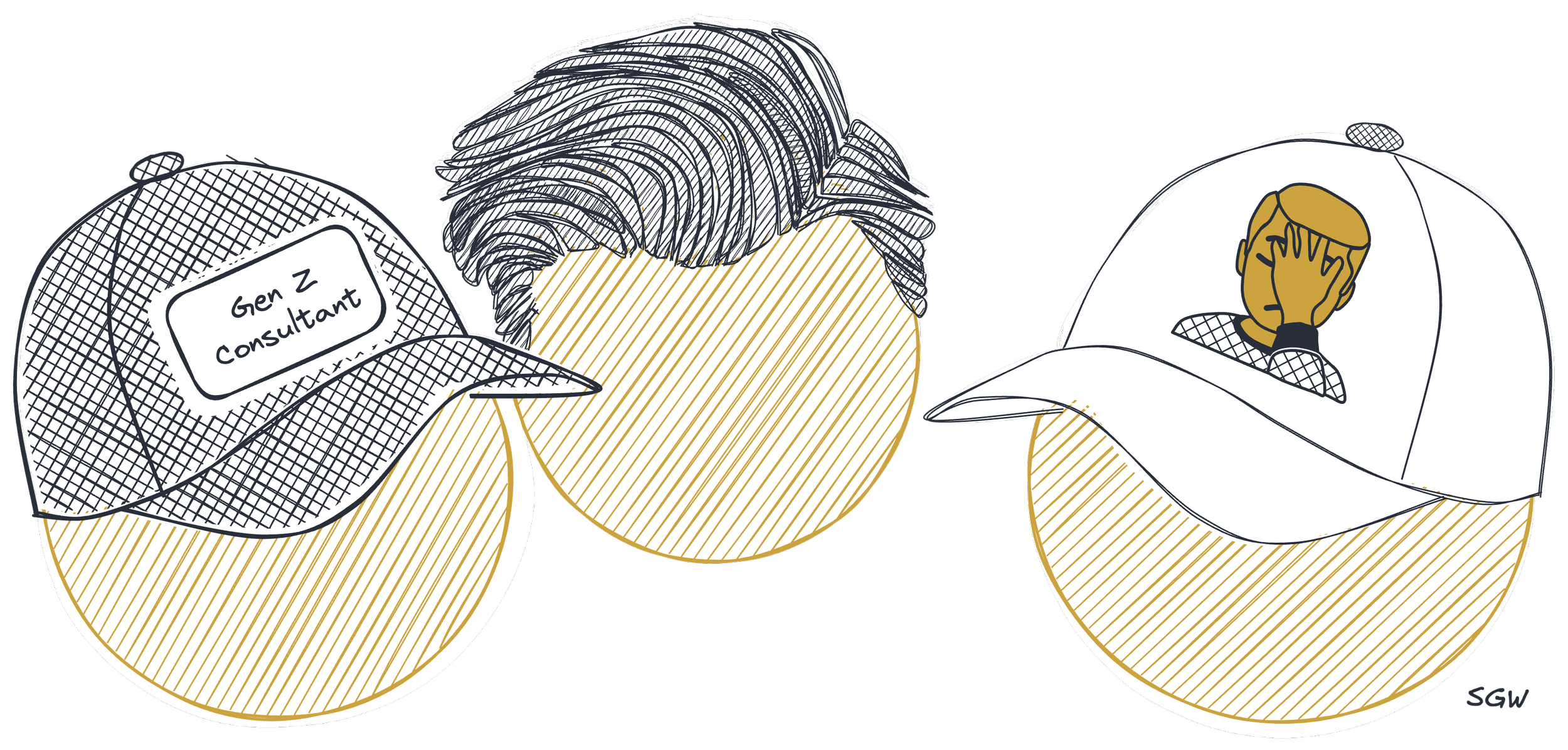
Facepalm.
The second was after Danny (who didn’t get a glass, but has a cute kid) asked if we’d be willing to write a certain check size and I replied that if certain conditions were met I’d be “willing to right that check.”
Double facepalm.
I called myself out for both of these mistakes after I realized I made them and then apologized to the team in advance for all of the accommodations they might have to make now and in the future to compensate for my increasing senility. They laughed and said they’d check my work for me going forward.
But I really was a little bit worried.
So I went looking for some research on why this happens (with my fingers crossed that the explanation wasn’t just senility) and came across “Why did I right that? Factors that influence the production of homophone substitution errors.”
It helpfully explained that the brain has two ways of thinking about spelling. It can remember how words are spelled or it can sound them out, and when it’s working fast those two systems can get confused – and that has nothing to do with getting old. In fact, ever-sycophantic AI made me feel better by explaining that “strong language fluency” actually increases one’s propensity for making homophone-related errors because when I’m writing I’m so focused on ideas, rhythm, and sentence structure.
So there/their/they’re you have it. I’m stupid because I’m smart.
Have a great weekend.
– Tim
Sign up below to get Unqualified Opinions in your inbox.
The information, opinions, and views presented in this publication are provided solely for general informational and educational purposes. They are of a general nature, have not been tailored to the specific circumstances of any individual or entity, and do not constitute a comprehensive statement of the matters discussed. This material should not be interpreted or relied upon as investment, legal, tax, accounting, regulatory, or other professional advice, and nothing in this publication is intended to be or should be construed as such. You should obtain advice from your own professional advisors regarding the applicability of the information to your particular circumstances.
The views and analyses expressed are those of the author and do not necessarily represent or reflect the views, opinions, policies, or positions of Permanent Equity Management, LLC, its officers, directors, employees, affiliates, or portfolio companies, or of any person or entity with whom the author may be affiliated. Permanent Equity Management, LLC makes no representation or warranty, express or implied, as to the accuracy, completeness, timeliness, or suitability of the information contained herein and expressly disclaims any liability for errors or omissions.
This publication is not, and should not be construed as, an offer to sell, a solicitation of an offer to buy, or a recommendation of any security, financial instrument, or other product. It does not form the basis of any contract and does not create a fiduciary, advisory, or client relationship with Permanent Equity Management, LLC. Any examples or references to third-party content are for illustrative purposes only and do not constitute an endorsement. Permanent Equity Management, LLC is not responsible for the availability, accuracy, or content of third-party materials. Past performance is not indicative of future results. Any forward-looking statements are inherently uncertain and subject to change.