
Diet Review Series: Mediterranean
From Director of Health Alex Maples
In a region that swings wildly between fearing fat, fearing carbs, and counting every macro, the Mediterranean Diet calmly pours more olive oil, passes the bread, and washes it down with a nice glass of wine.
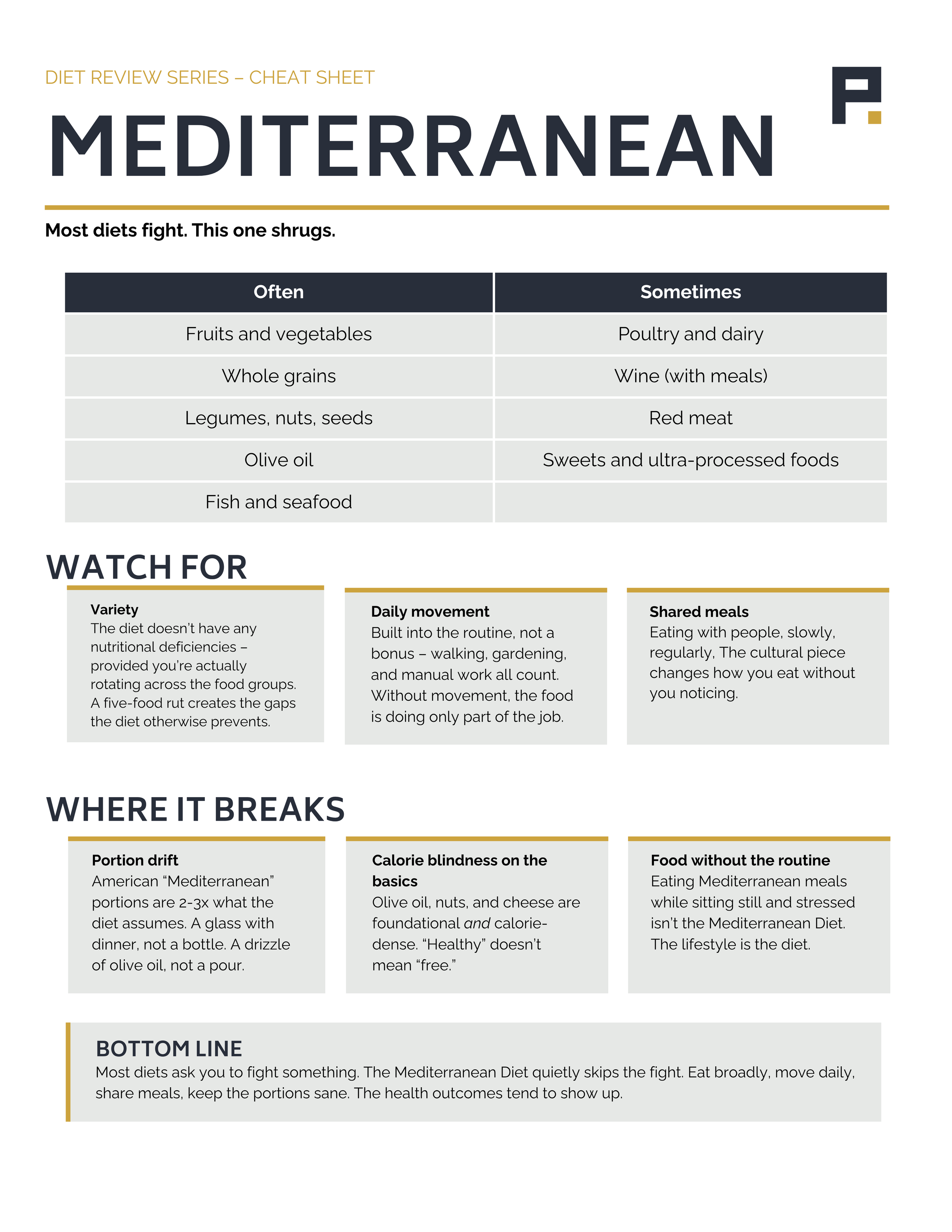
The Mediterranean Diet isn’t just a diet. It’s a lifestyle, built on daily movement, rest, and shared meals, which are inseparable from the outcomes it’s meant to produce. (It also has the kind of institutional backing most diets dream about. The American Heart Association, American Diabetes Association, Alzheimer’s Association, National Institutes of Health, and Academy of Nutrition and Dietetics all stand behind it as an evidence-based pattern for cardiometabolic health.)
The foundation of the Mediterranean Diet is fresh fruits and vegetables, whole grains, legumes, nuts, seeds, and olive oil. Add in fish, poultry, and dairy, usually yogurt and cheese, on the regular, with red and processed meats occasionally. Also included: wine, typically in moderation, with meals, and in society with others.
The diet itself was shaped by the environment. Hot, dry summers and mild, wet winters favored olives, grapes, figs, and hardy grains, while coastal access added a steady supply of fish. For most of its history, people in the Mediterranean Basin ate this way not for health, but because it reflected what was locally available.
It hit the American psyche when Ancel Keys’ Seven Countries Study linked eating patterns in places like Italy and Greece with lower rates of heart disease. The study was influential, if imperfect, and Keys remains a controversial figure, but subsequent research has repeatedly supported the diet’s health benefits.
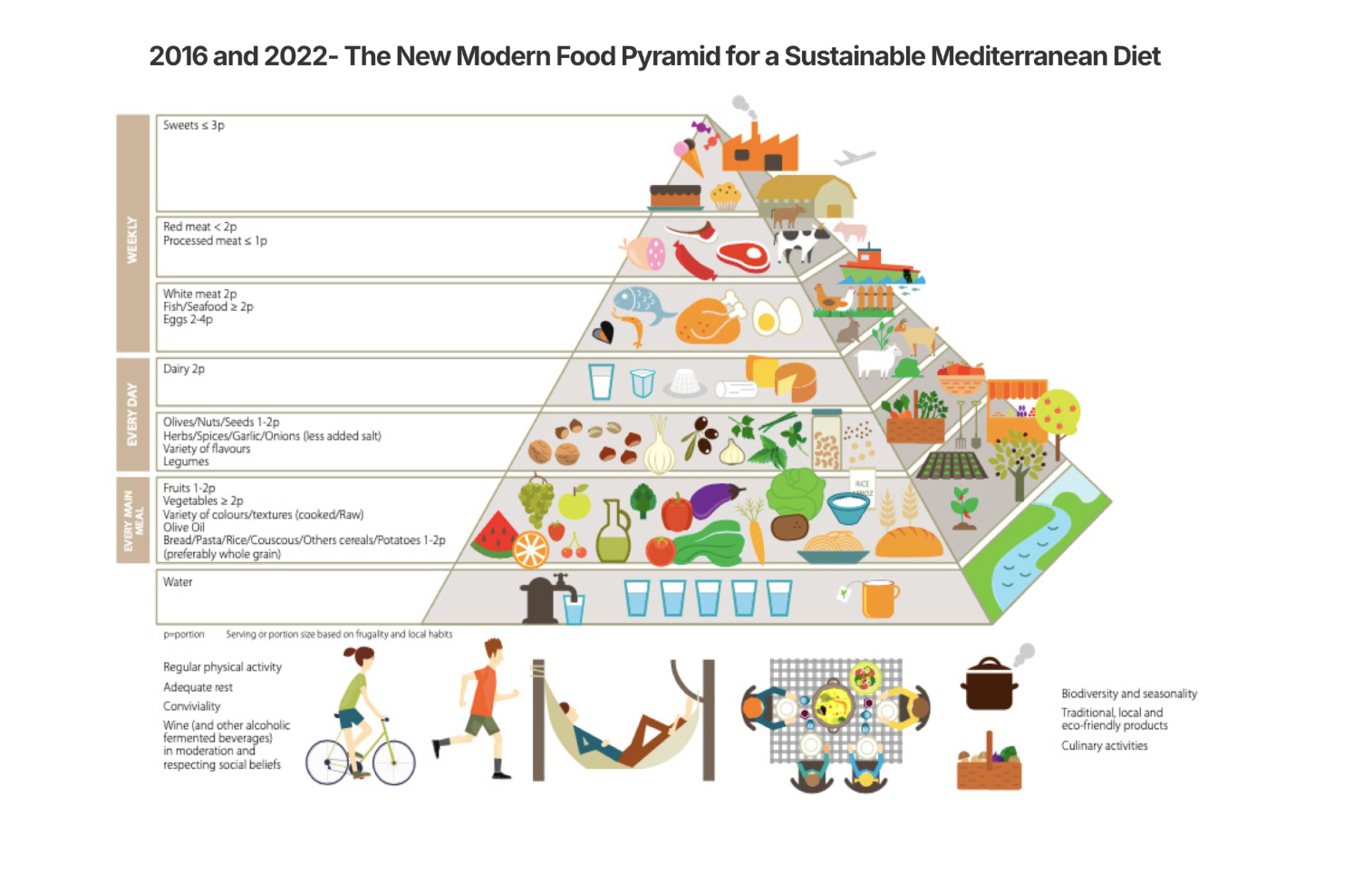
How the Mediterranean Diet Reduces Calorie Intake
The Mediterranean pattern centers on whole, minimally processed foods (like most of the effective diets we’ve discussed). This alone is one of the biggest levers for reducing caloric intake.
What separates it is how inclusive it is. No food group is eliminated, but many are constrained by frequency and portion. Red and processed meats are consumed rarely, dairy is moderate, and wine is included but limited to small amounts with meals.
Rather than labeling foods as “good” or “bad,” the Mediterranean diet operates on a spectrum. Most foods are allowed, but some require more restraint than others.
Another piece that sets the Mediterranean diet recommendations apart: daily movement, appropriate rest, and communal meals are baked in. It’s one of the few dietary patterns that explicitly incorporates activity, sleep and stress management, and social structure alongside nutrition. It’s that kind of holistic approach that makes the Mediterranean diet effective – and sustainable.
Potential Nutrient Gaps
There aren’t any. That’s the upshot of including basically every food group in moderation. When you eat broadly, nothing important gets left out.
Protein is covered through fish, poultry, dairy, legumes, and occasional red meat. Fiber comes from fruits, vegetables, whole grains, and legumes. Omega-3s are supplied by fatty fish, while iodine and B12 are supported through seafood and dairy.
Of course issues can arise if variety is limited or you’re neglecting key components. But when followed broadly, the Mediterranean diet covers your nutritional bases better than most.
How We Break It (Common Failure Modes)
With great freedom comes great responsibility. The Mediterranean diet includes a bunch of foods (Bread! Pasta! Olive oil! Nuts! Wine, for crying out loud!) that are often viewed as no-nos in other diets. All of these – bread, pasta, wine, olive oil, nuts, cheese – are calorie-dense, highly palatable, and easy to overeat. The Mediterranean Diet includes them, but quietly assumes moderation. Ignore the moderation piece and you’ve already broken the diet.
Remember that the foundation is built on large servings of fruits and vegetables with smaller portions of grains, proteins, and fats. Ignoring this is no longer the Mediterranean diet. It’s just eating the foods listed on the diet list.
Sustainability Factor
The Mediterranean diet is a strong candidate. It covers nutritional needs while offering a wide range of foods and flavors.
Bread, pasta, fruits, vegetables, grains, legumes, dairy, fish, poultry, and occasional red meat provide enough variety to avoid monotony. If you’re bored, it’s more likely due to a lack of creativity than a lack of options.
The Final Verdict
The Mediterranean diet isn’t just a list of foods. It’s a pattern of living.
Nutritionally diverse, flexible, and grounded in both biology and culture, it offers a model of eating that extends beyond the plate. Like any approach, it can be undermined by excess and poor execution, but when the structure is preserved, it’s one of the most complete and sustainable dietary patterns available.
Most diets in this series ask you to fight something. Carbs, fats, meat, time of day, your own appetite. The Mediterranean Diet quietly skips the fight. It assumes you’ll move, rest, and share meals with people. It builds around those foundations rather than on restriction. That’s the part institutional backing can’t fully explain, and a part worth taking seriously.
New to the Diet Review Series? Start with Setting the Table — it lays out the fat-loss lens we run every diet through.