

Diet Review Series: Keto
It all begins with an idea.
From Director of Health Alex Maples
Because carbs are the root of all evil… right?
The keto diet has cooled in recent years, but for much of the past decade it was the “it” diet in the weight-loss space.
Keto originated in the 1920s as a medical intervention for epilepsy, especially in children. Doctors noticed that, while fasting dramatically decreased seizure frequency, it was not a viable long-term strategy for growing kids. Dr. Russell Wilder at the Mayo Clinic hypothesized that ketosis might be responsible for the improvement and proposed a diet designed to mimic fasting’s metabolic state while still providing adequate calories.
The original therapeutic ketogenic diet was roughly 80%-90% fat, with carefully controlled protein and only trace carbohydrates. It was highly effective for epilepsy and became a go-to treatment at the time, before fading when anticonvulsant medications arrived in the 1930s and offered a far more convenient option for families. Keto persisted in medication-resistant epilepsy (and a handful of other neurologic applications), but largely disappeared from public view.
That changed in the 1970s when Dr. Robert Atkins popularized low-carbohydrate dieting for weight loss and metabolic health in Dr. Atkins’ Diet Revolution. His thesis ran counter to prevailing wisdom, which held that dietary fat drove cardiovascular disease and should be avoided. (Even in the pre-internet era, contrarian ideas had their appeal.) Through the 70s and 80s, Atkins simmered in the background while the mainstream food industry pivoted to low-fat everything.
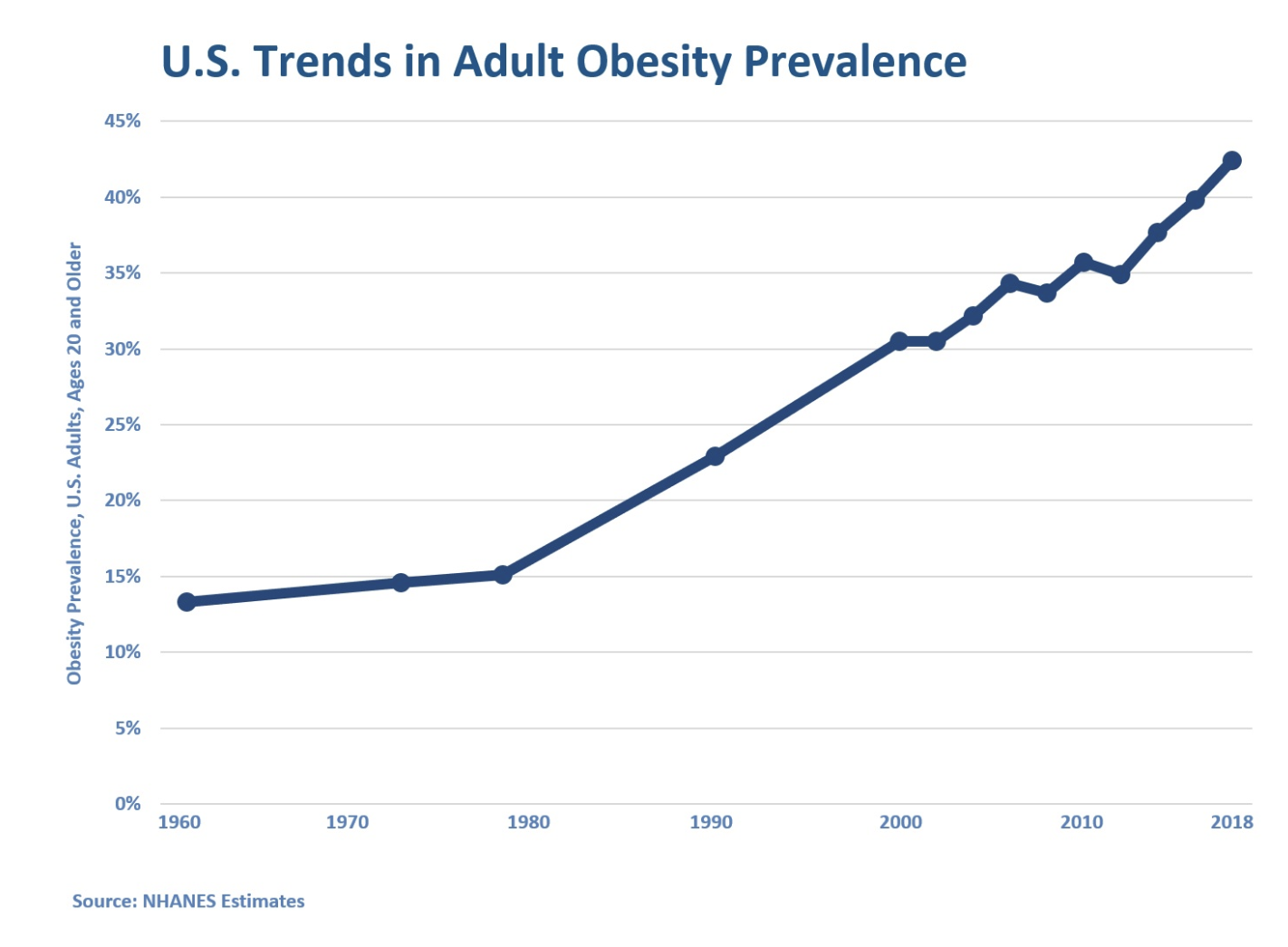
Meanwhile, the obesity epidemic was snowballing. By the mid-to-late 90s, public frustration was boiling over. People felt they’d done everything “right”: high-carb, low-fat, lots of jogging and aerobics, yet they were heavier than ever. When Atkins re-released his book in the late 1990s, it said what many people were already thinking: this isn’t working. It went nuclear, selling over 10 million copies and spending multiple years on the New York Times bestseller list in the late 1990s and early 2000s.
The narrative was simple and provocative. You’ve been lied to, fat isn’t what’s making you fat, carbs are. Here is what to do instead.
Atkins’ approach wasn’t “no carbs forever.” It was a structured reset with four phases.
Phase 1: Induction
Duration: At least 2 weeks
Goal: Initiate weight loss, reduce appetite
<20g of carbohydrates per day from leafy greens
Moderate protein
Higher fat by default
Phase 2: Ongoing Weight Loss (OWL)
Duration: Highly individualized
Goal: Continue losing fat and find carb tolerance
Gradually increase carb intake by 5g/week
Begin to introduce nuts, seeds, berries, and small amounts of higher carb foods
Seek maximum carb intake while still losing weight
Phase 3: Pre-maintenance
Duration: Highly individualized
Goal: Slow weight loss and find maintenance
Increase carb intake by 10g/week
Expand food variety
Identify carb intake for maintenance
Phase 4: Maintenance
Duration: Indefinite
Goal: Maintain weight loss with a less restricted eating pattern
Unlike the caricature of Atkins, the actual diet was a far more nuanced intervention aimed at restoring appetite control and gradually reintroducing carbohydrates. In many ways, that made it a better long-term framework than what it eventually evolved into. But nuance doesn’t go viral.
The early phases produced rapid, visible feedback. But, maintenance required self-regulation without dramatic reinforcement.
As often happens when structure loosens, things slip and weight regain follows. The hardest part of most diets isn’t losing weight, it’s maintaining it. Gritting your teeth and following rigid rules is often easier than learning to moderate when the lines get blurry.
Add in a slew of Atkins-branded processed foods, and the problems multiplied. The diet that was built around whole foods began selling packaged snack bars, and its credibility took a hit.
“Biohacking,” butter coffee, and the rise of KETO 4 EVA
Like a phoenix from the ashes, low carb rose again in a new form. This time with less nuance and more buzzwords.
Ketones! Autophagy! Mitochondrial Biogenesis! Epigenetics!
The early 2010s saw the rise of direct-to-consumer health information and the proliferation of long-form podcasts. With it came keto’s resurgence. The narrative shifted from losing weight to optimizing your biology.
Figures like Peter Attia (rigorously) and Dave Asprey (less so) began discussing ketosis as a powerful metabolic tool, framing it as a path to metabolic optimization.
Arthritis: Ketosis
Eczema: Ketosis
Brain Fog: Ketosis
Depression: Ketosis
ED: Ketosis
Some of these claims had plausible mechanisms. Others raced ahead of the human data.
This time around, the tools to make it data-driven were there: ketone breath meters, urine strips, blood ketone testing. Suddenly there was a quantifiable target outside of calorie counting, a clear biochemical definition of “doing it right.”
Even the framing reinforced the simplicity. Gary Taubes’ book was titled Good Calories, Bad Calories.
Add in highly visible podcasters amplifying expansive claims about ketosis, and you had a recipe for virality.
How Keto Works
In its strict therapeutic form, the ketogenic diet used for epilepsy can reach 80%-90% of calories from fat, with carefully controlled protein and minimal carbohydrates.
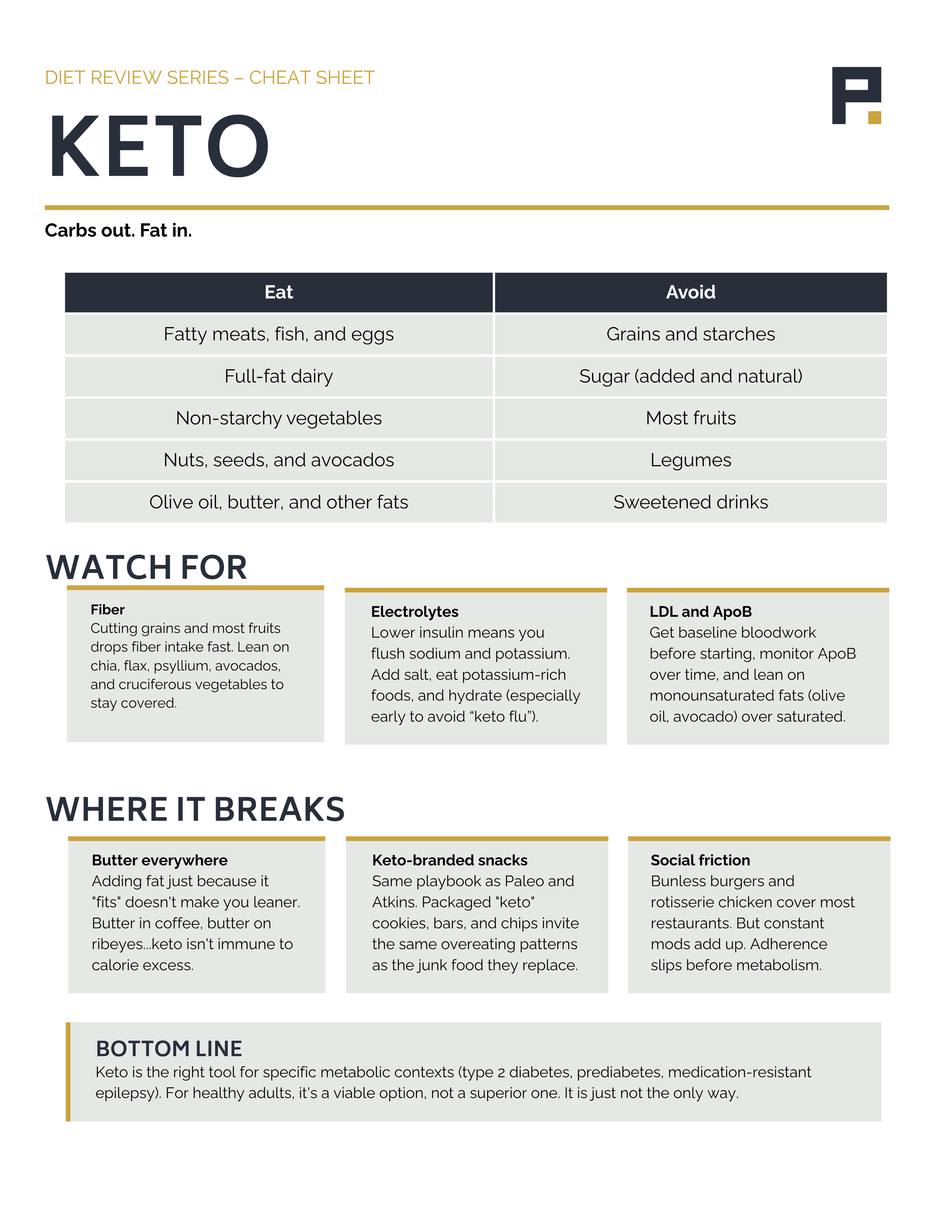
In practice, lifestyle keto typically looks like high fat, moderate protein, and very low carbohydrate (often under 50g per day) with the goal of sustaining nutritional ketosis.
Potential Nutrient Gaps
Keto is not inherently nutrient-deficient, but it does remove several food groups that commonly provide fiber and key micronutrients. Without deliberate attention to vegetables, minerals, and seafood, gaps are possible.
Fiber: One of the most common shortfalls on a keto diet is fiber, especially if intake of non-starchy vegetables is low. There are solid low-carb sources such as chia seeds, flax, psyllium husk, avocados, and cruciferous vegetables, but they require intentional inclusion.
Sodium and Potassium: While not inherently lacking, carbohydrate restriction lowers insulin levels, which increases sodium excretion by the kidneys. Water, sodium, and potassium losses can contribute to fatigue, headaches, and the so-called “keto flu.” Being intentional about electrolyte intake, especially early in the diet, is important.
A Note on LDL Cholesterol
One of the most debated aspects of the keto diet is its effect on LDL cholesterol, and specifically the number of ApoB-containing particles in your blood. ApoB (apolipoprotein B) is the protein on the surface of LDL and related particles, and counting it is increasingly viewed as a more precise measure of cardiovascular risk than LDL cholesterol alone. The relationship between elevated ApoB and cardiovascular risk is well established.
Keto doesn’t cause LDL to rise in everyone, but for some it increases LDL and ApoB substantially. ApoB monitoring is the key marker to watch if you’re doing a long-term keto diet.
It’s worth noting that saturated fat intake generally raises LDL and ApoB. Limiting saturated fat and prioritizing monounsaturated fats such as olive oil and avocado may help mitigate that response.
How We Break It (Common Failure Modes)
Keto is largely built around the idea that dramatically reducing carbohydrate intake decreases appetite and, in turn, total caloric intake. For many people, this is true.
But keto is not immune to calorie excess. If you intentionally add large amounts of fat (butter in coffee, butter on ribeyes…) you can override appetite regulation. It’s possible to do this without exceeding your energy needs, but it becomes less likely as energy density rises.
Like any dietary pattern, sustained calorie surplus leads to weight gain. And, as discussed earlier, extremely high saturated fat intake may also negatively affect LDL and ApoB levels.
That said, keto deserves credit here. When adhered to strictly, if the foods are boring and engineered to tamp down your appetite, it’s harder to overeat.
Sustainability Factor
This is where the appetite-control advantage really gets put to the test.
Is keto sustainable? For some people, yes. For others, much less so.
Keto is a highly restrictive diet. Removing most carbohydrate-rich foods significantly reduces variety. Some people thrive within that structure; others find it difficult to sustain.
From a restaurant and convenience standpoint, there are usually workable options: a bunless burger, a salad with added protein, and rotisserie chicken. But long-term social flexibility matters, and for many people the constant modification becomes friction.
The Final Verdict
There are clear contexts where the keto diet has distinct advantages.
If you have type 2 diabetes or prediabetes, carbohydrate restriction can significantly reduce blood glucose and A1C. These conditions are rooted in insulin resistance and impaired carbohydrate metabolism. In that context, removing carbohydrates can produce meaningful clinical improvements.
In its original therapeutic role, keto remains an effective treatment for medication-resistant epilepsy and certain neurological conditions.
But if you already have healthy blood sugar regulation, there appears to be little added benefit (and potentially some downside from an athletic performance perspective) to removing carbohydrates entirely.
The keto diet is not the “optimal human diet.” It may, however, be the optimal diet in certain metabolic contexts, and that makes it valuable.
If you choose to follow a keto diet, monitor LDL and ApoB, prioritize fiber and micronutrients, and pay attention to fat quality. Done thoughtfully, it can be an effective way to manage appetite and support metabolic health. It’s just not the only way.
New to the Diet Review Series? Start with Setting the Table — it lays out the fat-loss lens we run every diet through.

Diet Review Series: IIFYM (If It Fits Your Macros)
It all begins with an idea.
From Director of Health Alex Maples
When lawlessness meets hyper-rigidity, you get a system that feels like freedom… until it doesn’t.
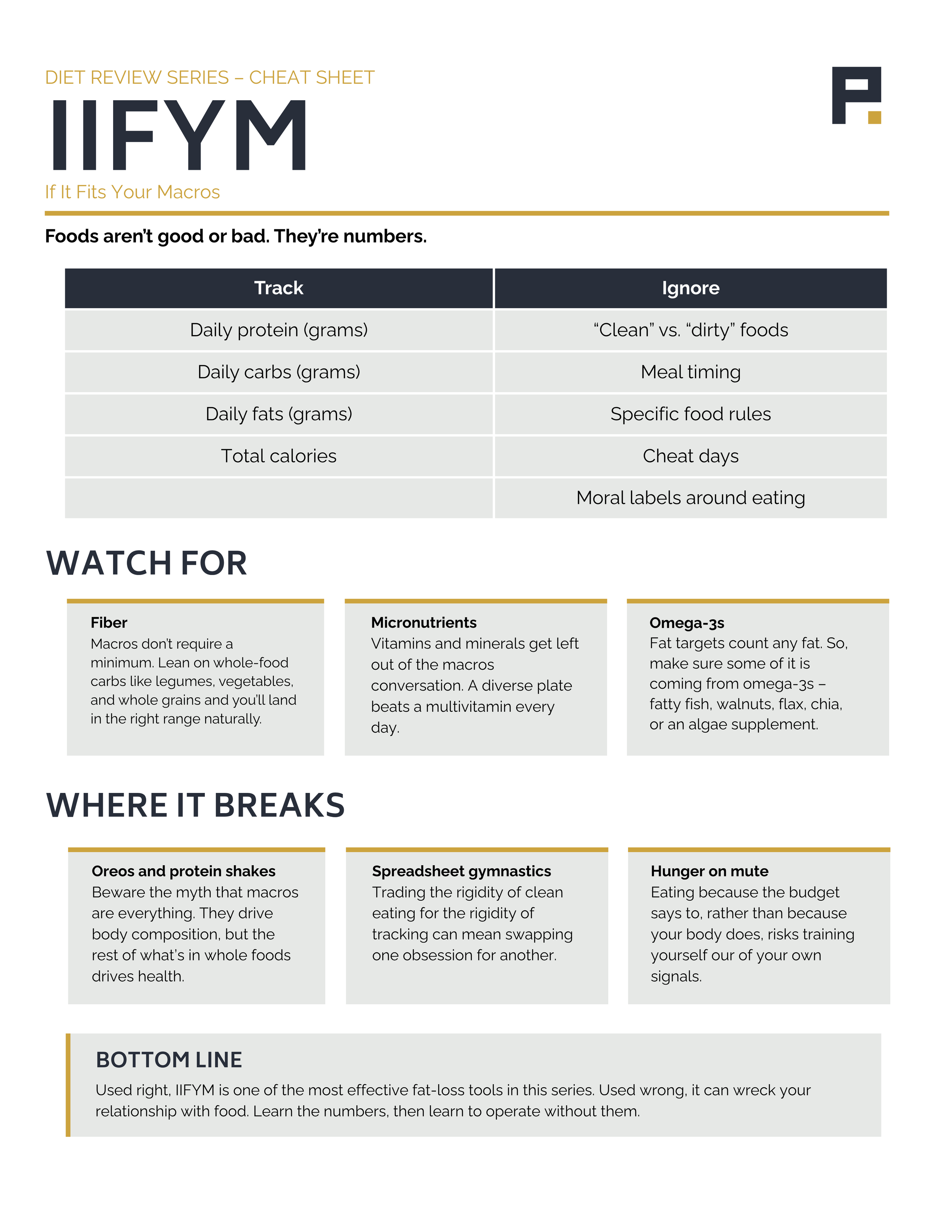
Born in the dark corners of late-90s bodybuilding forums, buried between grainy progress photos and endless debates about meal timing, IIFYM (if it fits your macros) stripped dieting down to its barest components. Macros, short for macronutrients, are the three primary components of food: protein, carbohydrates, and fats. Together, they make up the calories we eat. IIFYM takes this to its logical extreme: if your daily totals for protein, carbs, fats, and calories are on target, everything else is secondary.
Before IIFYM, the dominant belief was simple: to get lean, you had to eat “clean.”
In practice, this meant a narrow rotation of chicken, rice, and broccoli, along with a rigid moral hierarchy where foods were either “good” or “bad.”
The problem with clean eating wasn’t just boredom (although there was that). It was pressure. When every bite carries a moral label, slipping once often turns into abandoning the system.
IIFYM was a direct rebellion against the rigidity. It removed the moral labels and replaced them with math. Foods weren’t good or bad. They were numbers – information.
That shift was liberating. Instead of white-knuckling through weeks of restriction followed by explosive “cheat days,” people could incorporate foods they actually enjoyed on a regular basis and break free from the classic restrict-binge cycle that defined traditional dieting.
The catch is the machinery behind the freedom: food scales, tracking apps, spreadsheets, and the constant negotiation of numbers. Every bite becomes a transaction. Every meal is a budget decision.
Used right, IIFYM is a highly effective fat loss tool. Used wrong, it can break your relationship with food.
How IIFYM Reduces Calorie Intake
This is simple. IIFYM restricts calories by… restricting calories.
Your macro targets create a built-in calorie ceiling. Stay within the numbers and you stay within your energy budget. Overshoot, and you don’t.
No food rules required.
Potential Nutrient Gaps
All of them and none of them at the same time.
Since there are no recommended foods, you could get all of your necessary dietary components in a day or, outside of protein, be eating the most deficient diet imaginable. There are no recommendations for fiber intake, vitamins, minerals, or omega-3s, all of which are important parts of a healthy diet.
The smart play is to eat a wide array of nutritious foods while staying mindful of your numbers. In other words, stick with the intentions of IIFYM.
How We Break It (Common Failure Modes)
This part is a little more nuanced. The IIFYM premise works as far as it goes. Calories, macro distribution, and lifting absolutely drive body composition. Unsurprising, since the diet was built by bodybuilders.
But there’s a real difference between hitting those numbers eating meats, fruits, and vegetables and slamming Pop-Tarts and protein shakes. While calories and macros largely dictate body composition, the rest of what’s in your food shapes overall health, performance, and satiety. Fiber, micronutrients, and fats like omega-3s serve vital functions for overall health. Living on packaged nonsense and a multivitamin doesn’t quite serve the same function as eating whole foods.
IIFYM was meant to loosen the laces on what counted as okay to eat, as long as you still hit your goals. But, as the internet likes to do, recipes for outrageous concoctions and videos bragging about how many Oreos you could eat and still get shredded took over the IIFYM conversation.
What started as flexibility turned into spectacle. This is why we can’t have nice things.
IIFYM also breaks because it takes something genuinely helpful – macro targets – and turns it into the only thing. Exchanging rigid clean eating for spreadsheet gymnastics is just swapping one obsession for another.
And that obsession has unintended consequences. A big one? Losing the ability to tap into hunger cues. Hunger is not constant; some days you’ll be hungrier than others. If your sole focus is hitting your budget no matter how your body feels, you’re going to lose the natural ebb and flow of appetite.
If you get to the end of the day and feel satisfied but the budget says you’re supposed to eat 40 more carbs and you do, you are no longer training yourself to listen to your body. Most people don’t want to weigh food and track calories forever. While gaining awareness of the calorie content of various foods and how it feels to eat different amounts is good, training yourself out of listening to hunger cues might bite you in the ass in the long run.
Sustainability Factor
Like the hook implies, IIFYM is both incredibly flexible and super rigid at the same time.
From a food variety perspective, there are no rules, so boredom is a non-issue. At the same time, food quantity is strictly controlled (you weigh and log everything that passes through your lips). This doesn’t eliminate spontaneity, but it does turn it into a budgeting exercise. If you want something on the fly, you can have it. You just have to adjust for it later.
Where this becomes more difficult is in environments you don’t control. Restaurants, social events, and travel introduce a level of uncertainty where you don’t know the true composition of what you’re eating. You can estimate, but it’s no longer precise. For someone trying to strictly adhere to targets, that can create friction.
Sure, the flexibility makes it easier to navigate day-to-day life compared to more rigid diets, but it still requires a level of attention and planning that not everyone wants to maintain long term. It also has the potential to stir up disordered behavior around food.
IIFYM was never intended to be something you do forever, but rather a tool to gain awareness and reach a specific goal. From a sustainability perspective, it’s a powerful tool that should be used judiciously, but not indefinitely.
The Final Verdict
If you want to ensure success in weight loss, IIFYM is hard to beat. If you want to build a healthy relationship with food and hunger signaling, it can be either helpful or disastrous.
A healthy way to approach IIFYM is to eat a diet consisting of a variety of largely unprocessed foods like meats, vegetables, fruits, grains, legumes, and dairy, while also being mindful of the amounts you are eating. (This probably sounds familiar, if you’ve been following along.)
Use the tracking period as a calibration tool. Learn what a 500-calorie meal looks like on a plate. Learn how full 30 grams of protein actually leaves you. Then put the scale down.
Learn the numbers, then learn to operate without them.
New to the Diet Review Series? Start with Setting the Table — it lays out the fat-loss lens we run every diet through.

Diet Review Series: Mediterranean
It all begins with an idea.
From Director of Health Alex Maples
In a region that swings wildly between fearing fat, fearing carbs, and counting every macro, the Mediterranean Diet calmly pours more olive oil, passes the bread, and washes it down with a nice glass of wine.
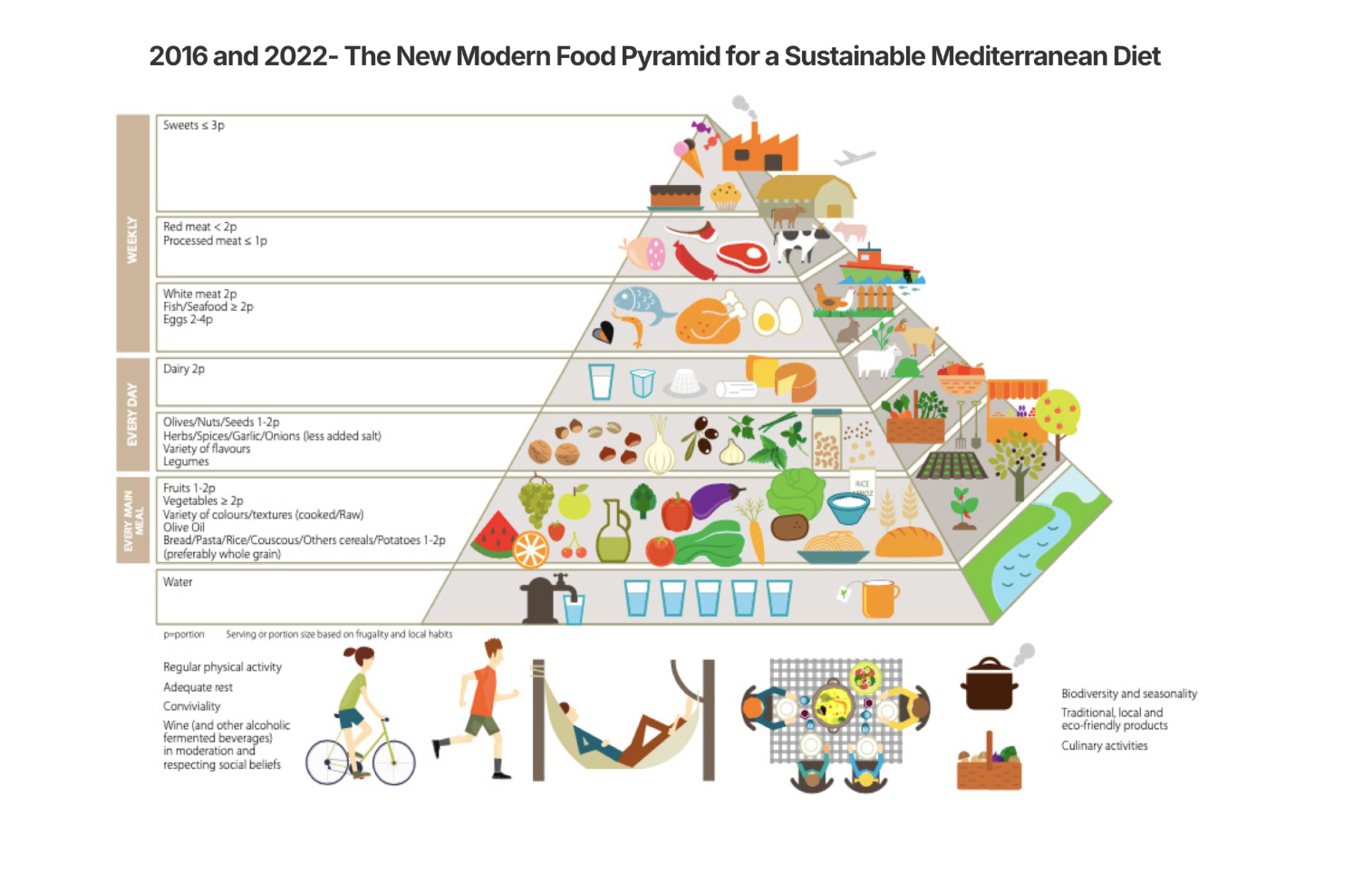
The Mediterranean Diet isn’t just a diet. It’s a lifestyle, built on daily movement, rest, and shared meals, which are inseparable from the outcomes it’s meant to produce. (It also has the kind of institutional backing most diets dream about. The American Heart Association, American Diabetes Association, Alzheimer’s Association, National Institutes of Health, and Academy of Nutrition and Dietetics all stand behind it as an evidence-based pattern for cardiometabolic health.)
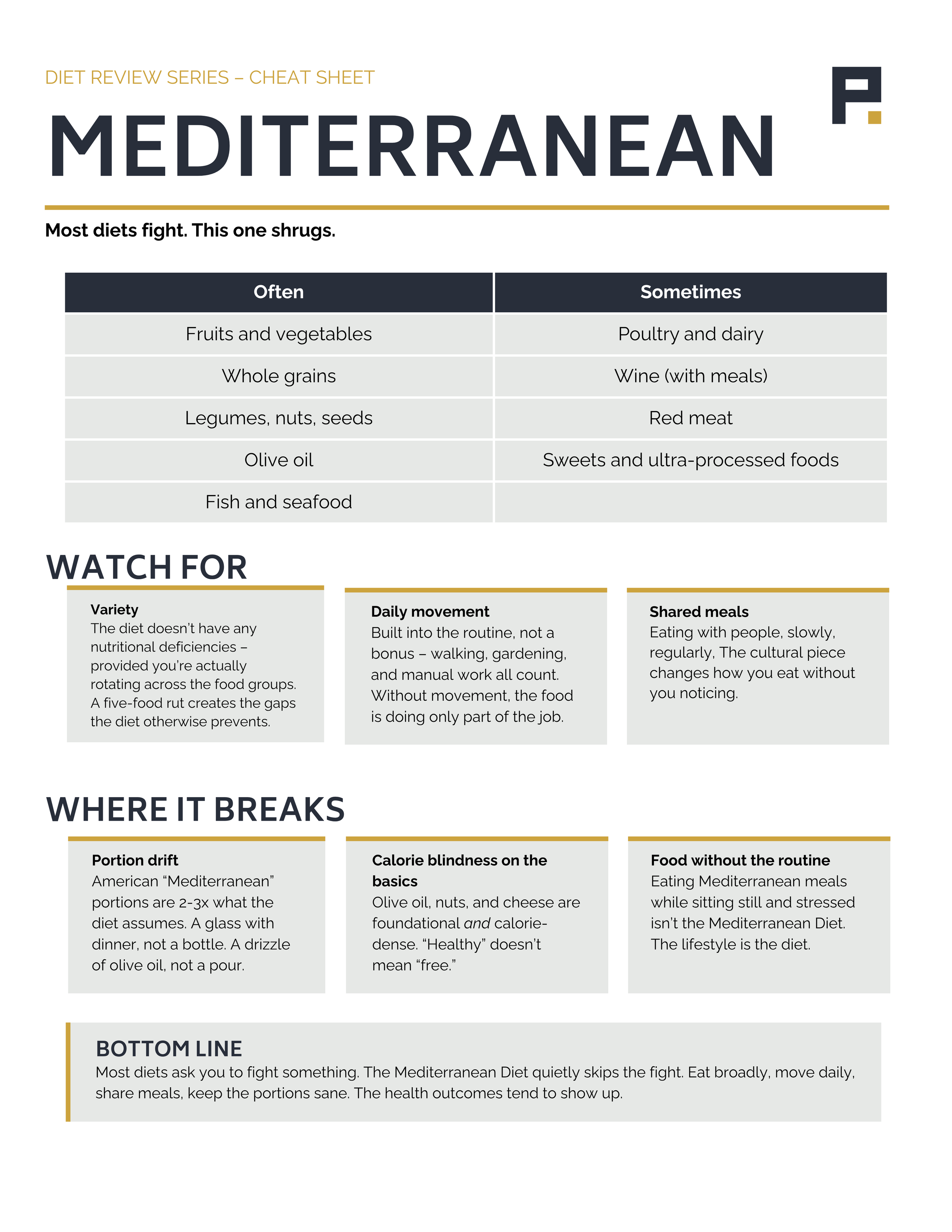
The foundation of the Mediterranean Diet is fresh fruits and vegetables, whole grains, legumes, nuts, seeds, and olive oil. Add in fish, poultry, and dairy, usually yogurt and cheese, on the regular, with red and processed meats occasionally. Also included: wine, typically in moderation, with meals, and in society with others.
The diet itself was shaped by the environment. Hot, dry summers and mild, wet winters favored olives, grapes, figs, and hardy grains, while coastal access added a steady supply of fish. For most of its history, people in the Mediterranean Basin ate this way not for health, but because it reflected what was locally available.
It hit the American psyche when Ancel Keys’ Seven Countries Study linked eating patterns in places like Italy and Greece with lower rates of heart disease. The study was influential, if imperfect, and Keys remains a controversial figure, but subsequent research has repeatedly supported the diet’s health benefits.
How the Mediterranean Diet Reduces Calorie Intake
The Mediterranean pattern centers on whole, minimally processed foods (like most of the effective diets we’ve discussed). This alone is one of the biggest levers for reducing caloric intake.
What separates it is how inclusive it is. No food group is eliminated, but many are constrained by frequency and portion. Red and processed meats are consumed rarely, dairy is moderate, and wine is included but limited to small amounts with meals.
Rather than labeling foods as “good” or “bad,” the Mediterranean diet operates on a spectrum. Most foods are allowed, but some require more restraint than others.
Another piece that sets the Mediterranean diet recommendations apart: daily movement, appropriate rest, and communal meals are baked in. It’s one of the few dietary patterns that explicitly incorporates activity, sleep and stress management, and social structure alongside nutrition. It’s that kind of holistic approach that makes the Mediterranean diet effective – and sustainable.
Potential Nutrient Gaps
There aren’t any. That’s the upshot of including basically every food group in moderation. When you eat broadly, nothing important gets left out.
Protein is covered through fish, poultry, dairy, legumes, and occasional red meat. Fiber comes from fruits, vegetables, whole grains, and legumes. Omega-3s are supplied by fatty fish, while iodine and B12 are supported through seafood and dairy.
Of course issues can arise if variety is limited or you’re neglecting key components. But when followed broadly, the Mediterranean diet covers your nutritional bases better than most.
How We Break It (Common Failure Modes)
With great freedom comes great responsibility. The Mediterranean diet includes a bunch of foods (Bread! Pasta! Olive oil! Nuts! Wine, for crying out loud!) that are often viewed as no-nos in other diets. All of these – bread, pasta, wine, olive oil, nuts, cheese – are calorie-dense, highly palatable, and easy to overeat. The Mediterranean Diet includes them, but quietly assumes moderation. Ignore the moderation piece and you’ve already broken the diet.
Remember that the foundation is built on large servings of fruits and vegetables with smaller portions of grains, proteins, and fats. Ignoring this is no longer the Mediterranean diet. It’s just eating the foods listed on the diet list.
Sustainability Factor
The Mediterranean diet is a strong candidate. It covers nutritional needs while offering a wide range of foods and flavors.
Bread, pasta, fruits, vegetables, grains, legumes, dairy, fish, poultry, and occasional red meat provide enough variety to avoid monotony. If you’re bored, it’s more likely due to a lack of creativity than a lack of options.
The Final Verdict
The Mediterranean diet isn’t just a list of foods. It’s a pattern of living.
Nutritionally diverse, flexible, and grounded in both biology and culture, it offers a model of eating that extends beyond the plate. Like any approach, it can be undermined by excess and poor execution, but when the structure is preserved, it’s one of the most complete and sustainable dietary patterns available.
Most diets in this series ask you to fight something. Carbs, fats, meat, time of day, your own appetite. The Mediterranean Diet quietly skips the fight. It assumes you’ll move, rest, and share meals with people. It builds around those foundations rather than on restriction. That’s the part institutional backing can’t fully explain, and a part worth taking seriously.
New to the Diet Review Series? Start with Setting the Table — it lays out the fat-loss lens we run every diet through.

Diet Review Series: Vegan
It all begins with an idea.
From Director of Health Alex Maples
Patchouli intensifies.
If vegetarianism is the cousin who shows up late, veganism is the one who brought a PowerPoint. It takes the “no meat” premise and extends it: no leather, no wool, no animal-derived ingredients anywhere in the basket.
Veganism existed as a quiet subcategory of vegetarianism for thousands of years, grounded in the same spiritual traditions. The modern distinction started in 1944 when Donald Watson and others split from the UK Vegetarian Society, defining veganism as avoiding all forms of animal exploitation, not just meat on the plate, but leather on the couch and cheese on the pizza. For most of the next 70 years, that’s what veganism was: a small, ethically-motivated movement piggybacking on anti-war sentiment and environmentalism in the 60s and 70s.
The health framing showed up much later. Forks Over Knives (2011), amplified by Netflix and social media, recast veganism as a cure for cardiovascular disease.Beyond Meat and Impossible Burgers landed a few years later, turning a fringe lifestyle into a grocery-aisle option. Today, veganism lives as half ethics, half wellness (with the ethics often quietly in the back seat).
How Veganism Reduces Calorie Intake
If you’ve been following this series, the pattern should look familiar by now.
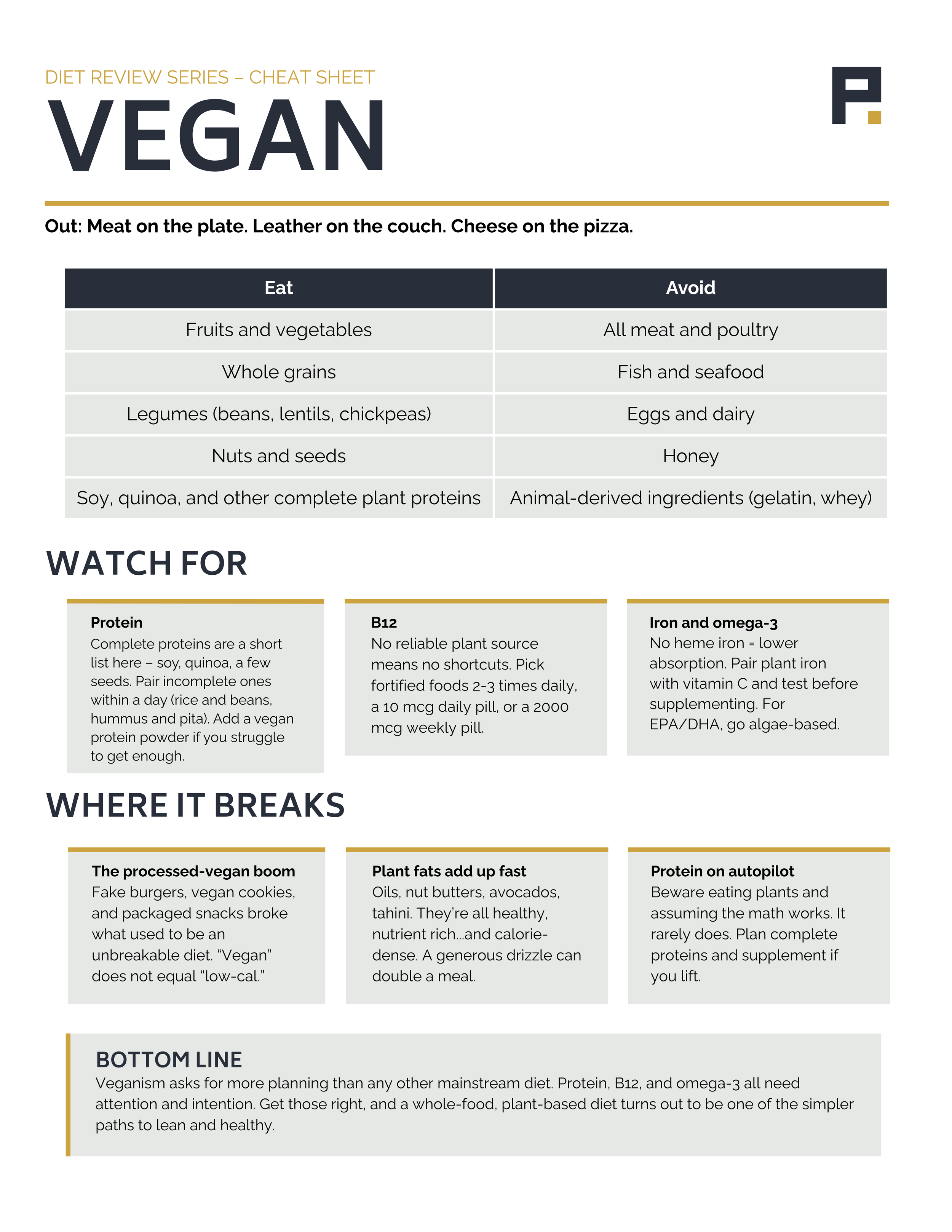
Veganism tends to reduce caloric intake largely by restricting food options. Theoretically, vegan diets are built almost entirely from whole grains, fruits, vegetables, legumes, nuts, and seeds.
The result? When done right, a substantial reduction in calorie intake, translating to lower obesity rates and, downstream, reduced rates of type 2 diabetes and cardiovascular disease.
Potential Nutrient Gaps
Veganism and vegetarianism share many nutritional challenges. But, with fewer fallback options, you need even more intentional planning to make sure you’re getting what your body needs.
Protein
Protein is the battle in the vegan world. Doable, but it takes strategy.
When we talk about protein requirements, we generally assume that most of it comes from “complete” proteins (i.e., ones that carry all nine essential amino acids in roughly the right ratios and are digestible enough to actually count).
What makes the cut? Soy checks all those boxes. So do quinoa, buckwheat, amaranth, and a few seeds (try chia and hemp). Frankly, it’s a pretty short list – and the reason vegans who are serious about protein talk a lot about soy.
Outside of complete proteins, the name of the game is pairing. (Note, it doesn’t have to be in the same meal, just the same day). Most traditional food cultures figured this out centuries ago:
Rice and beans
Lentils and wheat
Hummus and pita
Peanut butter and whole-grain bread
As an amino acid, leucine deserves special mention. It’s relatively scarce in vegan diets, but plays a critical role in muscle protein synthesis. For anyone trying to build or preserve muscle, a vegan protein powder (think soy isolate, or pea and rice blends) becomes less optional.
Vegan diets frequently mean higher total protein intake than omnivorous diets to compensate for lower digestibility and amino acid density. The upside is that these protein sources make you feel fuller for longer, meaning you’re less likely to overeat.
Vitamin B12
B12 is essential for DNA synthesis, red blood cell formation, and neurological function. But, it comes from bacteria. That means animal products or fortification – plants don’t provide it.
Supplementation is non-negotiable. Three working options:
Fortified foods (plant milks, nutritional yeast, fortified cereals) two to three times per day, targeting ~3mcg total
A daily supplement of >10 mcg
A weekly supplement of 2,000 mcg
Any of these work. This is a solved problem; you just have to be sure it’s actually solved for you.
Iron
Same story as the vegetarian diet. No heme iron at all, which means lower absorption and no absorption-boosting effect on the plant iron that is there.And, it’s a bigger issue for women than men.
But don’t supplement blindly. Consider regular bloodwork to understand what you actually need. Too much iron is just as problematic as too little.
Omega-3 fatty acids (EPA & DHA)
Plant foods provide ALA, which the body does convert into EPA and DHA – but inefficiently. As with vegetarian diets, an algae-based omega-3 supplement helps close the gap.
How We Break It (Common Failure Modes)
Twenty years ago, veganism was nearly unbreakable from a calorie-control standpoint. Processed foods were scarce, no one was making vegan snacks, and good luck finding a vegan restaurant outside of California. You practically had to chug olive oil and soda to gain weight.
But now.
Vegan fast food. Vegan junk food. Entire cookbooks are dedicated to hyper-palatable, calorie-dense vegan recipes. This is great for accessibility and sustainability. Less great for fat loss.
That said, sticking to vegan staples like tofu, rice, beans, fruits, and vegetables still generally translates to fat loss. The biggest challenge then becomes muscle maintenance, not fat gain. Again, the solution is strategy – sufficient protein, supplementation, and a solid resistance training program make the problem solvable.
Things fall apart (note the pattern in all of these diets) when ultra-processed foods dominate intake. As Kevin Hall has shown repeatedly, processed foods drive higher calorie intake. Period.
Sustainability Factor
Veganism used to require commitment. Now it doesn’t, and that cuts both ways. Veganism has never been more sustainable socially and logistically, but processed food strikes again.
The Final Verdict
If you’re going to make veganism work, you’ve got to be intentional. Protein intake must be planned. Vitamin B12 supplementation is mandatory. Omega-3s require attention. None of these are deal-breakers, but they do require forethought.
At the same time, veganism has never been easier. Gourmet vegan chefs exist. High-quality supplements are readily available. There are even vegan bodybuilders. Sure, many are on steroids, but that’s beside the point.
I like to poke fun at vegans because they’re an easy target. But the reality is that veganism can be a very healthy way to live. On average, vegans are significantly leaner and healthier than the typical omnivorous American, and building and maintaining muscle on a vegan diet is absolutely possible.
Turns out that eating a largely whole-food, plant-based diet tends to make people pretty lean and healthy. Who would’ve guessed?
New to the Diet Review Series? Start with Setting the Table — it lays out the fat-loss lens we run every diet through.

Diet Review Series: Vegetarian
It all begins with an idea.
From Director of Health Alex Maples
I can smell the patchouli already.
Up next in the Diet Review series, we have the Vegetarian Diet.
Before we go further, let’s get specific. “Vegetarian” is an umbrella term covering several patterns. Broadly speaking, vegetarian diets center around fruits, vegetables, legumes, whole grains, nuts, and seeds, while excluding meat and animal products to varying degrees.
Where Vegetarianism Came From (And What It Wasn’t)
Vegetarianism did not originate as a health or weight-loss strategy. Its roots trace back to ancient India (roughly 1500-500 BCE) within spiritual traditions like Jainism, Hinduism, and, later, Buddhism. These practices are grounded in ahimsa – nonviolence toward living beings. Abstaining from meat became a moral and spiritual act.Vegetarianism didn’t acquire a health-oriented justification until the 1800s, largely through the Seventh-day Adventist movement. Still spiritual, but now with health longevity claims in the mix.
The China Study and the Modern Health Narrative
Enter The China Study, one of the most cited (and often misinterpreted) nutrition studies of all time.
A large epidemiological study examining dietary patterns, blood markers, and disease outcomes across rural Chinese counties, The China Study is frequently referenced in vegetarian circles. Regions with lower meat consumption tended to show lower rates of cardiovascular disease and more favorable lipid profiles.
Vegetarian proponents often point to this and conclude: Meat causes heart disease.
But context matters. The counties consuming more meat were generally more modernized. Think higher tobacco/alcohol use, less physical labor, and more access to meat. These were still relatively active, non-industrial populations, but the lifestyle differences mattered.
None of this “debunks” vegetarianism as a healthy option. It does, however, weaken the claim that meat intake itself was the primary driver of disease differences.
The author of The China Study later made broad claims that meat was inherently harmful, an interpretation that overreaches the evidence. Still, it undeniably cemented the “vegetarian equals healthier” narrative and helped propel vegetarianism into the modern wellness sphere. Add in growing concern about large-scale meat production, and vegetarianism is now both a moral and a health conversation.
Where I Stand
No moral arguments here. I personally choose to eat meat and think sourcing ethically is worth the effort when possible. That said, if vegetarianism is the path you want to take, what follows are the practical considerations needed to make it nutritionally sound, especially if fat loss is the goal.
Diets Under the Vegetarian Umbrella
Lacto-ovo vegetarian: Includes eggs and dairy, excludes all meat
Lacto vegetarian: Includes dairy, excludes eggs and meat
Ovo vegetarian: Includes eggs, excludes dairy and meat
Pescatarian: Includes fish, eggs, and dairy; excludes land-based meat
Vegan: Excludes all animal products, including eggs, dairy, honey, and animal-derived ingredients (vegetarianism’s militant cousin)
For this series, it makes the most sense to split vegetarian diets into three buckets:
Lacto-ovo variations
Pescatarian
Vegan
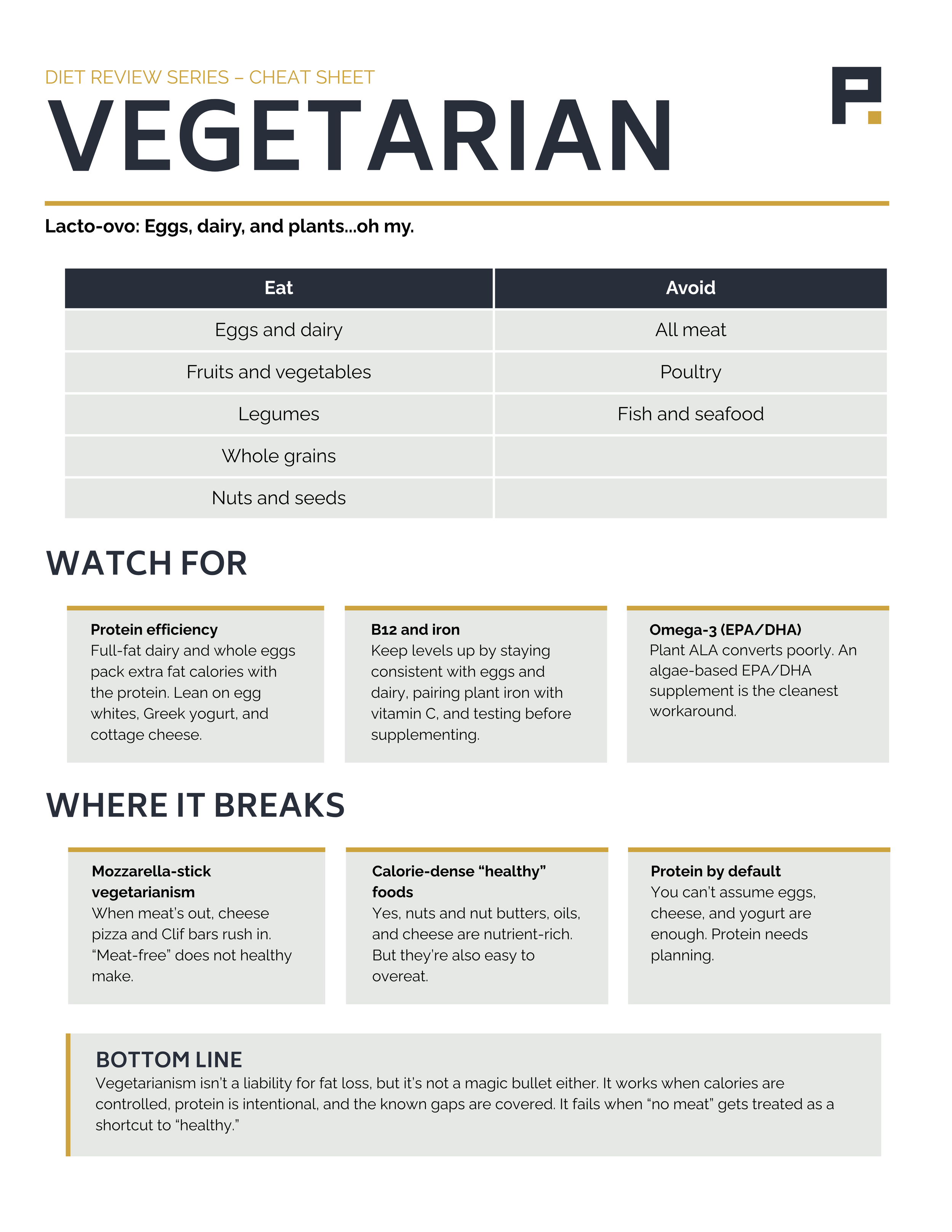
Here we’re talking about lacto-ovo variations, which center eggs, dairy products, fruits, vegetables, legumes, nuts, and seeds while excluding any form of meat.
How Vegetarianism Reduces Calorie Intake
There’s a common assumption that removing meat automatically reduces caloric intake. That can be true if “meat” means cheeseburgers, chicken tenders, and racks of ribs.
But meat can also be one of the leanest, most protein-dense foods available. Chicken breast, lean cuts of beef, pork tenderloin, and fish provide a lot of protein for relatively few calories.
So removing meat doesn’t automatically reduce calories.
Potential Nutrient Gaps
Protein (Amount and Quality)
Complete proteins contain all nine essential amino acids. Outside of meat, these are relatively limited, but eggs and dairy help a lot in lacto-ovo patterns.
The practical issue is calorie efficiency.
A whole egg has ~70 calories, ~7 g of fat, and ~7 g of protein. Fat provides 9 calories per gram, while protein provides 4. Eggs aren’t “bad,” but they’re more fat-dominant than protein-dominant. If most protein intake comes packaged with fat, calories can climb quickly.
Full-fat milk, cheese, and yogurt also provide high-quality protein and contain fats that can be nutritionally valuable, supporting satiety, hormone production, and absorption of fat-soluble vitamins. However, fat is still calorically dense, and those calories add up. When protein needs are high, relying primarily on full-fat dairy can make it harder to stay within an overall calorie target.
The good news: Modern options like egg whites, fat-free Greek yogurt, cottage cheese, and other low-fat dairy products dramatically improve protein-to-calorie ratios, making it far easier to hit protein targets while keeping total calories in check.
Vitamin B12
Vitamin B12 is found exclusively in animal foods.
Eggs and dairy contain some, but in much lower concentrations than meat. One egg provides roughly 20–25% of the RDA, while a 3 oz serving of beef provides 100–110%.
This doesn’t make deficiency inevitable, but it does require consistency and planning. Miss a few days of eggs or dairy, and intake drops fast.
Iron
Iron deserves special attention, particularly for women.
Heme iron (from meat) is highly bioavailable
Non-heme iron (from plants and eggs) is absorbed less efficiently
Even more important: Heme iron enhances absorption of non-heme iron. Remove meat, and you lose both the best iron source and the absorption boost.
Dairy complicates this further: It contains little iron, and calcium can inhibit iron absorption. If dairy is doing most of the protein work while iron intake is low, deficiency risk increases.
Because excess iron is also harmful, blanket supplementation isn’t ideal. Bloodwork and targeted supplementation are the smarter route.
Omega-3 fatty acids
Omega-3s are a common weak point across most diets.
There are three forms:
ALA (plant-based precursor)
EPA (cardiovascular support)
DHA (brain and nervous system structure)
ALA converts poorly to EPA and DHA. Since EPA and DHA are found primarily in fish, vegetarians often come up short.
An algae-based EPA/DHA supplement is the cleanest workaround.
How We Break It (Common Failure Modes)
I call this “mozzarella stick vegetarianism.”
Meat gets removed, but it’s replaced with cheese pizza, deep fried mozzarella sticks, Clif bars, and other ultra-processed junk that happens to be vegetarian. Avoiding meat becomes a proxy for “healthy,” even when calories are high and nutrient density is low.
Not eating meat does not prevent overeating. There’s no shortage of highly palatable, calorie-dense vegetarian foods (once again, I’m looking at you, peanut butter).
Sustainability Factor
Lacto-ovo vegetarianism is highly sustainable, especially today. Restaurants and food companies cater to it well, and convenience is rarely an issue.
From a fat loss perspective, it offers no inherent advantage over other diets. You could even argue it introduces a small disadvantage by excluding lean, protein-dense meats. But, that’s easily offset with intentional food choices.
As with most diets, emphasizing fruits, vegetables, legumes, and whole foods improves satiety and micronutrient intake, making a calorie deficit easier to maintain.
The Final Verdict
Vegetarianism doesn’t automatically make you lean or healthy.
Calories still matter. Protein still matters. Nutrient coverage still matters. Removing meat doesn’t inherently create a caloric deficit, nor does it guarantee better body composition. What the epidemiological data does consistently show is that vegetarians, on average, tend to be leaner and have more favorable cardiometabolic risk profiles than typical Western omnivores. However, more recent data has added important nuance. The advantages associated with vegetarian diets appear to be driven far more by overall diet quality and lifestyle behaviors than by meat avoidance itself. When confounding factors like physical activity, smoking, alcohol use, and socioeconomic status are better accounted for, the mortality advantage of vegetarian diets becomes less consistent, even though improvements in markers like blood lipids, blood pressure, and diabetes risk often remain.
In other words, vegetarian diets tend to work well when they are built around whole, minimally processed foods and supported by generally health-conscious behaviors, just like every other diet strategy.
From a fat loss perspective, vegetarianism is neither a magic bullet nor a liability. It’s a viable framework that can support leanness and long-term health, but only when calories are controlled, protein intake is intentional, and known nutritional gaps are addressed. Removing meat doesn’t do the work for you. Thoughtful planning does.
New to the Diet Review Series? Start with Setting the Table — it lays out the fat-loss lens we run every diet through.
Diet Review Series: Paleo
It all begins with an idea.
From Director of Health Alex Maples
Eat like our ancestors because they were free from disease… right?
The Paleo diet originated in anthropology. Early researchers studying hunter-gatherer populations observed very low rates of the metabolic diseases common in modern societies: obesity, type 2 diabetes, and heart disease. This inspired thinkers like Walter Voegtlin, who published The Stone Age Diet in 1975. Voegtlin and others argued that humans evolved to eat only foods available during the Paleolithic era (roughly 3 million to 10,000 years ago), and that agriculture introduced grains, sugar, and other foods to which humans weren’t adapted. This “evolutionary mismatch,” they suggested, caused modern metabolic disease.
On vibes, the theory sounds great. History complicates it. Type 2 diabetes and atherosclerotic heart disease didn’t explode right after the agricultural revolution. In fact, they were rare until the late 1700s, when they appeared primarily as diseases of wealth. They still didn’t affect the general population in any significant way until the early 20th century, accelerating dramatically after World War II.
This timing suggests a murkier reality. Rather than “we ate foods we didn’t evolve to eat,” the explosion of metabolic disease aligns more closely with industrialization: less physical activity, far greater food availability, and the rise of highly processed, shelf-stable, energy-dense foods (many developed to feed soldiers overseas) making their way into the general population.
None of this means that a Paleo diet can’t be healthy or effective for weight loss. But it does undermine the claim that modern metabolic disease is primarily a post-agricultural mismatch.
That's enough history. Let’s dig in!
Paleo Defined
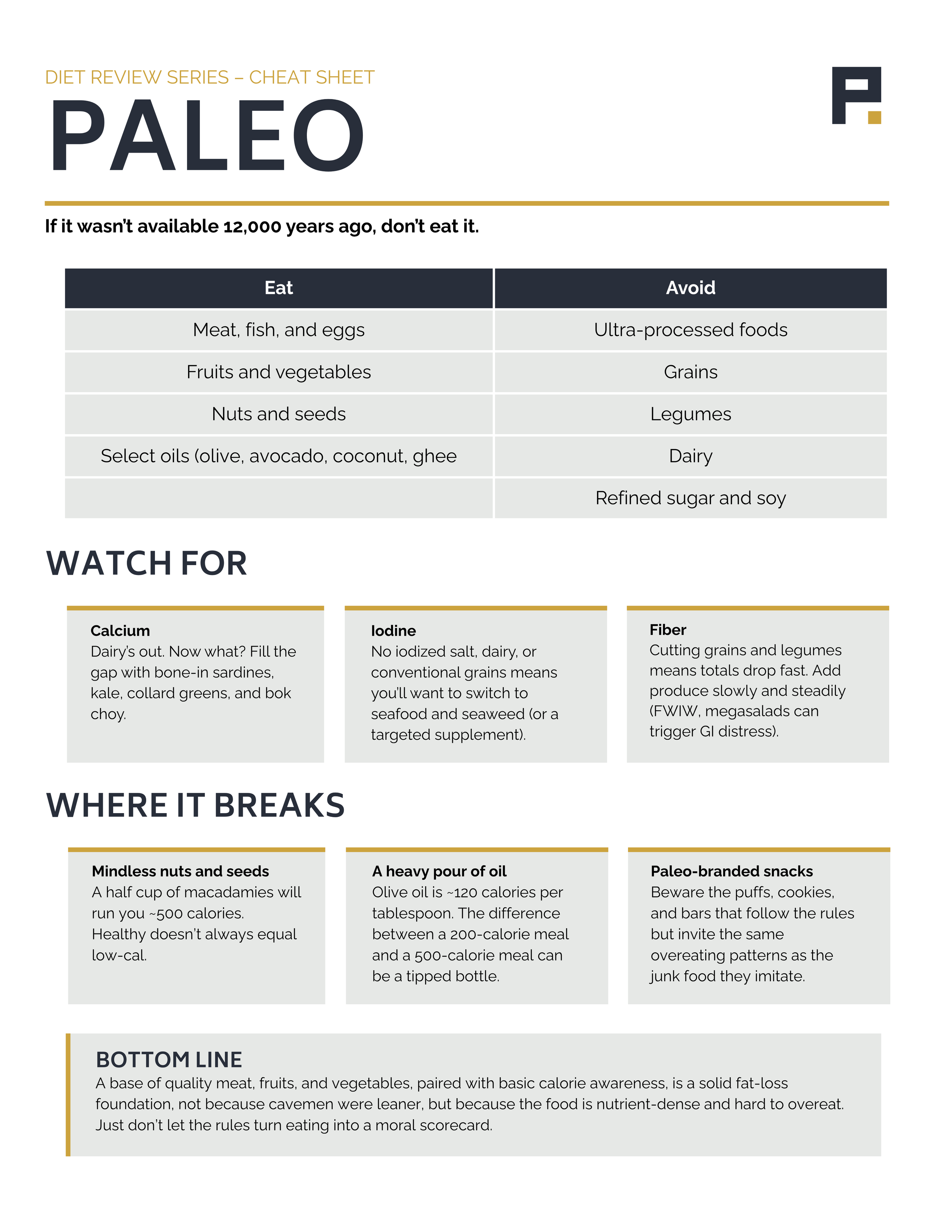
Core rule: If it wasn’t available 12,000 years ago, don’t eat it.
Well…with modern caveats. Many current Paleo plans include refined oils like coconut oil, olive oil, avocado oil, and ghee. Strict Paleo purists may disagree.
Included Foods
Meat, fish, and eggs
Fruits and vegetables
Nuts, seeds, and added fats (olive oil, avocado oil, coconut oil, ghee)
Excluded Foods
Ultra-processed foods
Grains
Legumes
Dairy
Refined sugar
Soy
How Paleo Reduces Calorie Intake
Constraint = fewer easy calories. Removing ultra-processed foods dramatically lowers overeating risk. Remember the Kevin Hall study where participants ate ~500 calories per day more on ultra-processed diets? Paleo largely eliminates that exposure. That’s, generally, a win.
That said, a note on “processed.” Not all ultra-processed foods are inherently bad. Convenience foods can be useful tools and help fill nutritional gaps. Whey protein powder, for example, is technically ultra-processed, but can be a highly practical and health-positive way to hit protein targets.
Restaurants become friction. Between seed oils (which may not actually be harmful), butter, sugar, soy, emulsifiers in sauces, dairy-based dressings, and grains hidden everywhere, eating out is a Paleo minefield. From a fat-loss and health perspective, this friction can help. From a convenience and enjoyment standpoint, it can be tough.
Potential Nutrient Gaps
Paleo is generally nutrient-dense: Meat, fruits, and vegetables provide a wide range of vitamins and minerals. Still, there are a few nutrients that require intentional planning.
Calcium
Removing dairy creates a significant calcium gap. That doesn’t mean calcium is unavailable on Paleo, but you have to seek it out.
Good Paleo-friendly sources include:
Sardines with bones
Dark leafy greens like kale, collard greens, and bok choy
Iodine
By removing iodized salt, dairy, and conventional grains, it removes common iodine sources.
Interestingly, iodine in grains largely comes from dough conditioners and dairy iodine comes from iodine in cattle feed and iodine-based disinfectants used in milking.
Without these, iodine intake can drop unless you eat seafood or seaweed regularly.
Fiber
This one surprises people.
Yes, fruits and vegetables contain fiber, but typically in smaller amounts per serving. Grains and legumes are among the most efficient fiber sources, and removing them can significantly reduce total intake.
While you can compensate with more produce, the volume required can lead to GI distress. Speaking from experience: Living on gigantic salads is a fast track to bloating and discomfort.
How We Break It (Common Failure Modes)
Nuts and Seeds
The easiest way to break Paleo is to overeat nuts and seeds. While healthy, nuts and seeds are very calorie dense and incredibly easy to mindlessly eat (as anyone who has sat down with a bag of shelled pistachios can attest to).
Calories per ½ cup:
Almonds: ~410–430 kcal
Cashews: ~430–450 kcal
Walnuts: ~370–390 kcal
Pecans: ~370–380 kcal
Pistachios: ~330–350 kcal
Macadamia nuts: ~500–520 kcal
Brazil nuts: ~470–490 kcal
Sunflower seeds (hulled): ~410–430 kcal
Pumpkin seeds (pepitas): ~360–380 kcal
Sesame seeds: ~410–430 kcal
Chia seeds: ~360–380 kcal
Flax seeds: ~300–320 kcal
Cooking Oils
Olive oil is one of the most health-positive foods on the planet. It also contains ~120 calories per tablespoon.
If you aren’t measuring, the difference between a 200-calorie meal and a 500-calorie meal can be as simple as tipping the bottle a little too far.
Fatty Meats
Fatty cuts like ribeye and pork butt aren’t inherently problematic, but ignoring calorie density while eating large portions at every meal can quickly stall fat loss.
Processed “Paleo” Snacks
Anytime a diet gains popularity, the market responds to fill the niche. Enter Paleo puffs, cookies, crackers, and bars. Essentially a lineup of processed snacks performing ingredient gymnastics to create a less tasty version of everyone’s favorite junk foods that still technically follow the rules of whatever diet is currently in fashion.
Paleo isn’t nearly as hot as it was 10 years ago (or was it 15? Damn I’m getting old), but these products are still very much alive. And, as always, processed foods designed to be palatable, even when branded as “healthy,” can be easy to overeat.
To their credit, Paleo-branded snacks do have a few things working in their favor. They’re generally more nutrient-dense than conventional junk food, often less hyper-palatable, and usually more expensive. All three of those factors can naturally limit intake for a lot of people.
Still, they’re snacks, and snacks that try to mimic indulgent foods tend to invite the same behavior patterns. Paleo rules don’t make you immune to overeating.
Sustainability Factor
If you’re comfortable cooking most of your own food, Paleo can be a plausible long-term approach. Modern access to a wide variety of fruits, vegetables, herbs, and spices keeps it more interesting and satisfying than the name might suggest.
The main challenge is social. Dining out narrows options quickly. As diet dogmas go, you could do worse than Paleo; just know where the friction lives.
The Final Verdict
Building the foundation of your diet around Paleo-approved foods, paired with basic calorie awareness, is a solid strategy. Not because cavemen were jacked or disease-free, but because a base of quality meat, fruits, and vegetables reliably delivers protein, micronutrients, and good satiety.
That said, there’s nothing inherently wrong with including whole grains, dairy, legumes, or even the occasional processed food, as long as overall calories are kept in check. One of the biggest pitfalls of diets built on a “good food vs. bad food” framework is that they moralize eating. For some, those rules fuel cycles of rigid “good” weeks, then “bad” rebounds and binges.
Food choices work best when they’re practical, flexible, and sustainable, not when they carry a moral scorecard.
New to the Diet Review Series? Start with Setting the Table — it lays out the fat-loss lens we run every diet through.

Diet Review Series: Setting the Table
It all begins with an idea.
From Director of Health Alex Maples
Now that we’ve established (and probably beaten into the ground) why body composition matters and how fat loss actually works, it’s time to put some popular diets under the microscope.
In this series, we’ll evaluate well-known diets through a fat loss lens. Not ideology. Not anecdotes. Just: Does it help you lose mostly fat (not muscle) and stay healthy while you do it?
For each diet, I’ll ask a few simple but important questions:
What is it, really?
How does it reduce caloric intake?
Are there nutritional gaps or deficiencies that need to be addressed?
How we break it (common failure modes)?
Is it sustainable long term?
The goal here is to drop the dogma and take a pragmatic look at whether these diets are actually useful tools when fat loss is the objective. Because while diets differ in branding and rules, effective fat loss usually requires a few common elements:
Adequate complete protein
Enough satiety to make adherence possible
Some mechanism to constrain total calories
A plan you can sustain beyond the fat-loss phase
That last point cannot be overstated.
If a diet is something you have to white-knuckle your way through, counting down the days until you can “go back to eating normally,” I have bad news: The weight you lost is likely to return. If the way you were eating led you to need fat loss in the first place, returning to those habits usually leads you to the same outcome.
The reality is that some diets work very well for some people. Others won’t. None will work for everyone. The point is figuring out which one works for you. This series isn’t about debunking diets or declaring winners. It’s about context.
My aim is to explain how a given diet works, who it might work for, and what to watch out for if you choose that path. From there, the individual decision becomes clearer, and far less emotional. Think of it like selecting the right tool for the job, not a new identity to wear.